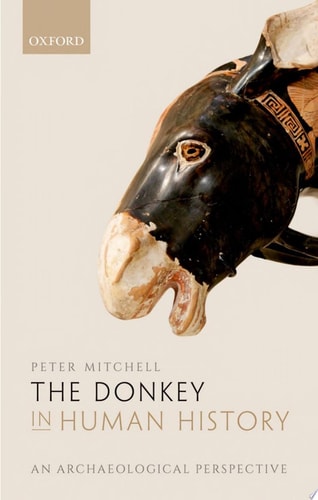
The Donkey in Human History: An Archaeological Perspective
0
0
As an Amazon Associate and affiliate partner, Menrva Books earns from qualifying purchases. Learn more
Author Description
Donkeys carried Christ into Jerusalem while in Greek myth they transported Hephaistos up to Mount Olympos and Dionysos into battle against the giants. They were probably the first animals that people ever rode, as well as the first used on a large-scale as beasts of burden. Associated with kingship and the gods in the ancient Near East, they have been (and in many places still are) a core technology for moving people and goods over both short and long distances, as well as a supplier of muscle power for threshing and grinding grain, pressing olives, raising water, ploughing fields, and pulling carts, to name just a few of the uses to which they have been put. Yet despite this, they remain one of the least studied, and most widely ignored, of all domestic animals, consigned to the margins of history like so many of those who still depend upon them. Spanning the globe and extending from the donkey's initial domestication up to the present, this book seeks to remedy this situation by using archaeological evidence, in combination with insights from history and anthropology, to resituate the donkey (and its hybrid offspring such as the mule) in the unfolding of human history, looking not just at what donkeys and mules did, but also at how people have thought about and understood them.
Menrva's Summary
THE THESIS
This book investigates the historical and archaeological significance of the donkey, arguing that this animal has been a fundamental yet overlooked driver of human development. Peter Mitchell, a specialist in African archaeology, synthesizes evidence from zooarchaeology, historical records, and anthropological studies to re-evaluate the donkey's role as a primary technology for transport, agriculture, and symbolic representation across global civilizations. By examining the transition from wild equids to domestic beasts of burden, the author provides a comprehensive framework for understanding how human societies have shaped and been shaped by their reliance on these animals.
THE SCOPE MAP
What You Will Find
- Analysis of the biological and behavioral evolution of the donkey and its hybrids.
- Archaeological evidence regarding the initial domestication and spread of the species.
- Examination of the donkey's role in ancient economies, including trade, agriculture, and water management.
- Cultural and symbolic interpretations of donkeys in mythology and religious history.
Scope Limits
- The text focuses primarily on the archaeological and historical record rather than contemporary veterinary or modern industrial management practices.
THE AUTHORITY PERSPECTIVE
Scholars and historians recognize this work as a significant contribution to the field of human-animal studies, filling a notable gap in the literature regarding domestic equids. Readers frequently note the academic rigor and the breadth of the research, which successfully elevates the donkey from a marginal historical subject to a central figure in human development.
Page Count:
296
Publication Date:
2018-01-01
Publisher:
Oxford University Press,
ISBN-10:
0191066141
ISBN-13:
9780191066146
Animals
Science
History
Domestic asses
Mules
Donkeys
Archaeology
Animal Remains Archaeology
Anthropology
Social History
Animals And Civilization
Community Tags
Similar Books