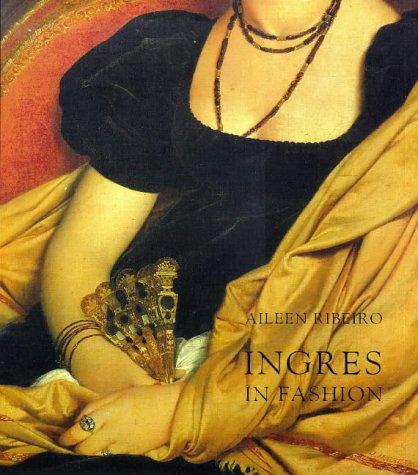
Ingres in Fashion
0
0
As an Amazon Associate and affiliate partner, Menrva Books earns from qualifying purchases. Learn more
Author Description
For more than half of the nineteenth century, French artist Jean-Auguste-Dominique Ingres (1780-1867) depicted the rapidly changing appearance of the fashionable woman with meticulous attention to detail and with rare perception and empathy. Working in a period that witnessed the development of a consumer society and the beginnings of couture, Ingres charted in his portraits how clothes were worn and what part they played in definitions of identity and status. This book explores for the first time the ways in which clothing, accessories, and fabrics define and display women in Ingres's portraits. With more than 150 illustrations that include the artist's portraits, fashion plates, portraits by contemporaries, and surviving items of costume, the book illuminates Ingres's work and its relation to the social and artistic discourse of his time. Eminent dress historian Aileen Ribeiro analyses in detail Ingres's attitudes, his skill in depicting clothing, and how he portrays the real and idealised woman in his paintings and drawings of the fashionable mainstream - the grandes dames of elite society, the newly opulent bourgeoisie, English visitors to Italy, and family and friends. Ribeiro also devotes a section of the book to the part played by textiles and accessories in Ingres's images of bathers and odalisques.
Menrva's Summary
THE THESIS
This book investigates how the 19th-century artist Jean-Auguste-Dominique Ingres depicted the evolving fashion of women in his era. Aileen Ribeiro, an eminent dress historian, examines Ingres's meticulous attention to detail and rare perception in portraying clothing, accessories, and fabrics, exploring their role in defining identity and status within a burgeoning consumer society. The analysis covers Ingres's portraits of elite society, the bourgeoisie, and visitors to Italy, as well as his depictions of bathers and odalisques, all illuminated by over 150 illustrations including fashion plates and surviving costume pieces.
THE SCOPE MAP
- Detailed analysis of Ingres's attitudes towards fashion and his skill in depicting clothing.
- Exploration of how clothing, accessories, and fabrics define and display women in Ingres's portraits.
- Examination of Ingres's portrayal of both real and idealized women across different social strata.
- Discussion of the role of textiles and accessories in Ingres's images of bathers and odalisques.
- Over 150 illustrations, including Ingres's portraits, fashion plates, and contemporary works.
THE AUTHORITY PERSPECTIVE
Eminent dress historian Aileen Ribeiro's work is recognized for its detailed analysis of Ingres's artistic approach to fashion. The book is lauded for its exploration of how clothing functioned as a marker of identity and status in 19th-century society, as depicted by the artist. Its comprehensive use of illustrations, including portraits and fashion plates, provides a rich visual context for the scholarly examination. The book illuminates Ingres's oeuvre through the lens of social and artistic discourse of his time.
Page Count:
259
Publication Date:
1999-01-01
ISBN-10:
0300079273
History
Non-Fiction
Art
Biography
Fashion history
European History
Art History
Community Tags
Similar Books