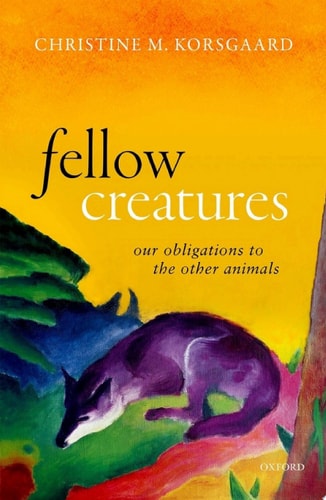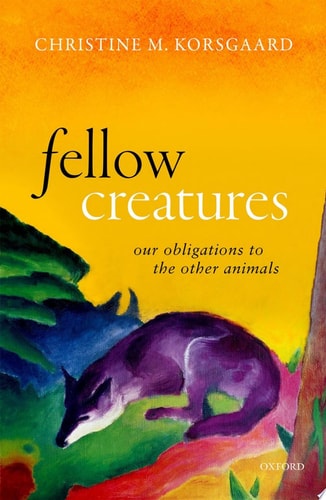
Fellow Creatures
0
0
As an Amazon Associate and affiliate partner, Menrva Books earns from qualifying purchases. Learn more
Author Description
Christine M. Korsgaard Presents A Compelling New View Of Humans' Moral Relationships To The Other Animals. She Defends The Claim That We Are Obligated To Treat All Sentient Beings As What Kant Called Ends-in-themselves. Drawing On A Theory Of The Good Derived From Aristotle, She Offers An Explanation Of Why Animals Are The Sorts Of Beings For Whom Things Can Be Good Or Bad. She Then Turns To Kant's Argument For The Value Of Humanity To Show That Rationality Commits Us To Claiming The Standing Of Ends-in-ourselves, In Two Senses. Kant Argued That As Autonomous Beings, We Claim To Be Ends-in-ourselves When We Claim The Standing To Make Laws For Ourselves And Each Other. Korsgaard Argues That As Beings Who Have A Good, We Also Claim To Be Ends-in-ourselves When We Take The Things That Are Good For Us To Be Good Absolutely And So Worthy Of Pursuit. The First Claim Commits Us To Joining With Other Autonomous Beings In Relations Of Moral Reciprocity. The Second Claim Commits Us To Treating The Good Of Every Sentient Creature As Something Of Absolute Importance. Korsgaard Argues That Human Beings Are Not More Important Than The Other Animals, That Our Moral Nature Does Not Make Us Superior To The Other Animals, And That Our Unique Capacities Do Not Make Us Better Off Than The Other Animals. She Criticizes The Marginal Cases Argument And Advances A New View Of Moral Standing As Attaching To The Atemporal Subjects Of Lives. She Criticizes Kant's Own View That Our Duties To Animals Are Indirect, And Offers A Non-utilitarian Account Of The Relation Between Pleasure And The Good. She Also Addresses A Number Of Directly Practical Questions: Whether We Have The Right To Eat Animals, Experiment On Them, Make Them Work For Us And Fight In Our Wars, And Keep Them As Pets; And How To Understand The Wrong That We Do When We Cause A Species To Go Extinct.
Menrva's Summary
THE THESIS
This work investigates the moral status of non-human animals and the nature of our obligations toward them through a Kantian framework. Christine M. Korsgaard, a prominent philosopher, synthesizes Aristotelian concepts of the good with Kantian ethics to argue that sentient beings possess intrinsic value. She challenges the traditional view that moral standing is exclusive to rational agents, asserting instead that our own rational nature commits us to recognizing the absolute importance of the well-being of all sentient creatures.
THE SCOPE MAP
What You Will Find
- A reinterpretation of Kantian ethics regarding moral reciprocity and the value of humanity.
- An analysis of the relationship between pleasure, the good, and the status of sentient subjects.
- Practical ethical applications concerning animal consumption, experimentation, labor, and pet ownership.
Scope Limits
- The text does not provide a comprehensive biological or ethological study of animal behavior.
- It does not focus on legal or policy-based animal rights advocacy, remaining primarily within the domain of moral philosophy.
THE AUTHORITY PERSPECTIVE
Scholars and philosophers frequently cite this text as a significant contribution to the field of animal ethics, noting its rigorous engagement with Kantian theory. Readers often observe that the prose is dense and requires a foundational understanding of moral philosophy to fully grasp the author's arguments.
Page Count:
272
Publication Date:
2018-01-01
Publisher:
Oxford University Press
ISBN-10:
0191068373
ISBN-13:
9780191068379
Non-Fiction
Philosophy
Animal Rights
Moral Philosophy
Ethics
Community Tags
Similar Books