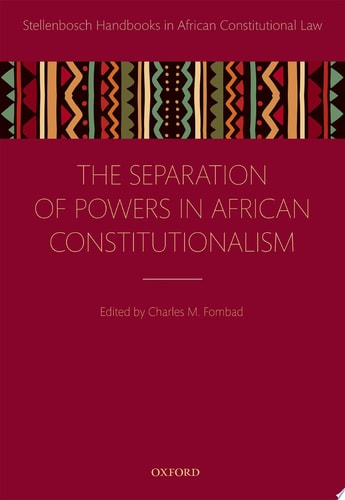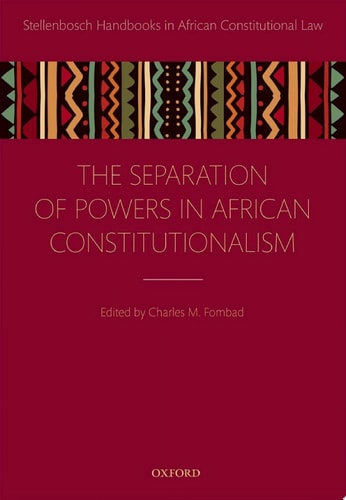
Separation of Powers in African Constitutionalism
0
0
As an Amazon Associate and affiliate partner, Menrva Books earns from qualifying purchases. Learn more
Author Description
The new series Stellenbosch Handbooks in African Constitutional Law will engage with contemporary issues of constitutionalism in Africa, filling a notable gap in African comparative constitutional law. Separation of Powers in African Constitutionalism is the first in the series, examining one of the critical measures introduced by African constitutional designers in their attempts to entrench an ethos of constitutionalism on the continent. Taking a critical look at the different ways in which attempts have been made to separate the different branches of government, the Handbook examines the impact this is having on transparent and accountable governance. Beginning with an overview of constitutionalism in Africa and the different influences on modern African constitutional developments, it looks at the relationship between the legislature and the executive as well as the relationship between the judiciary and the political branches. Despite differences in approaches between the different constitutional cultures that have influenced developments in Africa, there remain common problems. One of these problems is the constant friction in the relationship between the three branches and the resurgent threats of authoritarianism which clearly suggest that there remain serious problems in both constitutional design and implementation. The book also studies the increasing role being played by independent constitutional institutions and how they complement the checks and balances associated with the traditional three branches of government.
Menrva's Summary
THE THESIS
This volume investigates the efficacy of separation of powers mechanisms in African constitutional design and their subsequent impact on democratic accountability. Charles M. Fombad, a scholar in African constitutional law, utilizes a comparative framework to analyze how various African nations have attempted to structure the relationship between the executive, legislative, and judicial branches. The text argues that despite diverse constitutional influences, persistent friction between these branches and the threat of authoritarianism indicate significant failures in both the design and practical implementation of these systems.
THE SCOPE MAP
What You Will Find
- Comparative analysis of constitutional cultures across the African continent
- Examination of the interplay between the legislature, executive, and judiciary
- Assessment of the role of independent constitutional institutions as checks and balances
- Historical overview of constitutionalism and external influences on African legal development
Scope Limits
- Does not provide an exhaustive case-by-case study of every African nation
- Does not offer a prescriptive manual for constitutional drafting
THE AUTHORITY PERSPECTIVE
Experts identify this work as a foundational text for understanding the structural challenges of governance in modern Africa. Readers frequently note the academic density of the prose, which is tailored for legal scholars, policy analysts, and students of comparative constitutional law.
Page Count:
443
Publication Date:
2016-01-01
Publisher:
OUP Oxford
ISBN-10:
0191077925
ISBN-13:
9780191077920
Governance
Law
Constitutional Law
Comparative Law
Professional Career & Trade
Community Tags
Other Editions(3)
Similar Books