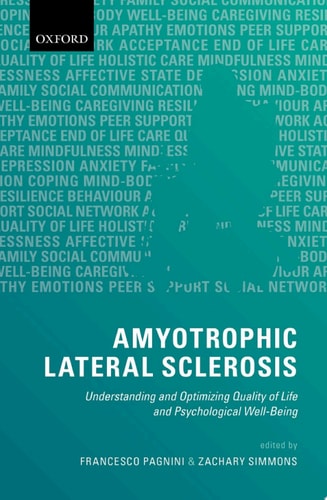
Amyotrophic Lateral Sclerosis: Understanding and Optimizing Quality of Life and Psychological Well-Being
0
0
As an Amazon Associate and affiliate partner, Menrva Books earns from qualifying purchases. Learn more
Author Description
Amyotrophic Lateral Sclerosis (ALS) is a devastating neurodegenerative disorder with a progressive and fatal course, with no known medical therapies that can reverse the disease or halt its progression. Palliative care is the mainstay of disease management, aimed at maximizing Quality Of Life (QOL) for the patient and caregiver. Clinicians caring for patients with ALS need to understand complex psychological issues in the patient and caregiver, including depression, anxiety, hopelessness, and wish for hastened death (physician-assisted suicide). They also need to confront the psychological implications of rapidly advancing genetic research, the impact of cognitive and behavioural dysfunction in a sizable minority of ALS patients, and caregiver burnout. Healthcare providers can optimize care by better understanding not only these factors, but by learning how to facilitate their management with problem-solving, coping techniques, and with psychologically-based approaches such as mindfulness and other non-pharmacological approaches aimed at maximizing QOL. Amyotrophic Lateral Sclerosis: Understanding and Optimizing Quality of Life and Psychological Well-Being provides a detailed review and evaluation of ALS, presented in a comprehensive and integrated fashion. The book achieves this through detailed and up-to-date information about the current state of knowledge in this field. It also offers new insights regarding future directions for research. This book will provide clinicians with a comprehensive description of the psychological aspects of ALS and their management, and incorporates chapters written by recognized scholars in their respective fields.
Menrva's Summary
THE THESIS
This book investigates how clinicians can optimize the quality of life and psychological well-being for patients diagnosed with Amyotrophic Lateral Sclerosis (ALS) and their caregivers. Authors Francesco Pagnini and Zachary Simmons, both experts in the field, synthesize current clinical research to provide a framework for managing the complex psychological challenges inherent in a progressive, terminal neurodegenerative condition. The text argues for a shift toward integrated, non-pharmacological interventions to address mental health concerns such as depression, anxiety, and caregiver burnout.
THE SCOPE MAP
What You Will Find
- Clinical evaluations of psychological issues including depression, anxiety, and hopelessness in ALS patients.
- Strategies for managing cognitive and behavioral dysfunction.
- Practical applications of mindfulness and problem-solving coping techniques.
- Insights into the psychological implications of genetic research and end-of-life decision-making.
Scope Limits
- The text does not provide medical protocols for reversing or halting the physical progression of the disease.
- It focuses primarily on psychological and palliative management rather than pharmacological treatment development.
THE AUTHORITY PERSPECTIVE
Clinicians and researchers frequently cite this work as a comprehensive resource for understanding the psychological dimensions of ALS care. Experts highlight the text as a foundational guide for integrating non-pharmacological approaches into standard palliative management protocols.
Page Count:
292
Publication Date:
2018-01-01
Publisher:
OUP Oxford
ISBN-10:
0191075140
ISBN-13:
9780191075148
Psychology
Allied Health
Health and Wellness
Medical
Humanities
Neurology
Community Tags
Other Editions(2)
Similar Books














Reader Comments
Share Your Thoughts
No comments yet. Be the first to share your thoughts!