Author Description
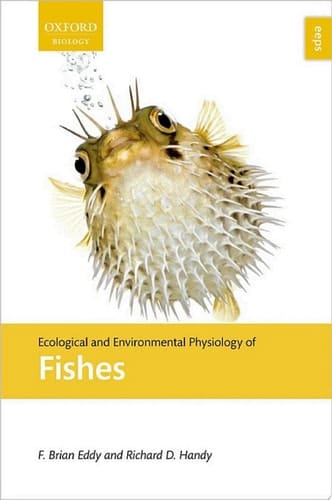
Essential Fish Biology provides an introductory overview of the functional biology of fish and how this may be affected by the widely contrasting habitat conditions within the aquatic environment. It describes the recent advances in comparative animal physiology which have greatly influenced our understanding of fish function as well as generating questions that have yet to be resolved. Fish taxa represent the largest number of vertebrates, with over 25,000 extant species. However, much of our knowledge, apart from taxonomy and habitat descriptions, has been based on relatively few of them, usually those which live in fresh water and/or are of commercial interest. Unfortunately there has also been a tendency to base our interpretation of fish physiology on that of mammalian systems, as well as to rely on a few type species of fish. This accessible textbook will redress the balance by using examples of fish from a wide range of species and habitats, emphasizing diversity as well as recognizing shared attributes with other vertebrates.
Menrva's Summary
THE THESIS
This text investigates the functional biology of fish and how diverse aquatic habitats influence physiological adaptations. Authors Derek and Margaret Burton utilize their expertise in comparative animal physiology to challenge the traditional reliance on mammalian models for understanding fish systems. The book argues for a broader perspective that accounts for the vast diversity of the 25,000 extant fish species, moving beyond the limited focus on freshwater or commercially significant types.
THE SCOPE MAP
What You Will Find
- Comparative physiological analysis across a wide range of fish taxa
- Examination of environmental impacts on fish function
- Synthesis of recent advances in aquatic biology research
- Discussion of unresolved questions in vertebrate physiology
Scope Limits
- Does not provide an exhaustive taxonomic catalog of all 25,000 species
- Excludes deep-dive clinical veterinary procedures for fish
THE AUTHORITY PERSPECTIVE
Experts recognize this work as a valuable introductory resource for students seeking to move beyond mammalian-centric physiological models. Readers frequently note the clarity of the prose, which makes complex comparative biology accessible for undergraduate study.
Page Count:
416
Publication Date:
2017-01-01
Publisher:
OUP Oxford
ISBN-10:
0191088439
ISBN-13:
9780191088438
Science
Ichthyology
Biology
Zoology
Fishes ecology
textbook
Community Tags
Similar Books