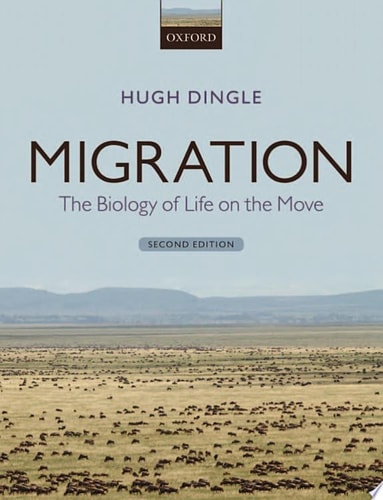
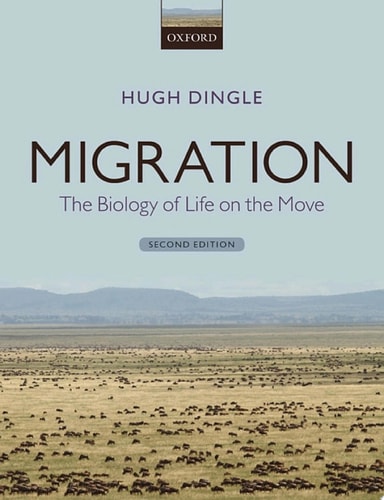
Migration: The Biology of Life on the Move
0
0
As an Amazon Associate and affiliate partner, Menrva Books earns from qualifying purchases. Learn more
Author Description
Migration, Broadly Defined As Directional Movement To Take Advantage Of Spatially Distributed Resources, Is A Dramatic Behaviour And An Important Component Of Many Life Histories That Can Contribute To The Fundamental Structuring Of Ecosystems. In Recent Years, Our Understanding Of Migration Has Advanced Radically With Respect To Both New Data And Conceptual Understanding. It Is Now Almost Twenty Years Since Publication Of The First Edition, And An Authoritative And Up-to-date Sequel That Provides A Taxonomically Comprehensive Overview Of The Latest Research Is Therefore Timely. The Emphasis Throughout This Advanced Textbook Is On The Definition And Description Of Migratory Behaviour, Its Ecological Outcomes For Individuals, Populations, And Communities, And How These Outcomes Lead To Natural Selection Acting On The Behaviour To Cause Its Evolution. It Takes A Truly Integrative Approach, Showing How Comparisons Across A Diversity Of Organisms And Biological Disciplines Can Illuminate Migratory Life Cycles, Their Evolution, And The Relation Of Migration To Other Movements. Migration: The Biology Of Life On The Move Focuses On Migration As A Behavioural Phenomenon With Important Ecological Consequences For Organisms As Diverse As Aphids, Butterflies, Birds And Whales. It Is Suitable For Senior Undergraduate And Graduate Level Students Taking Courses In Behaviour, Spatial Ecology, 'movement Ecology', And Conservation. It Will Also Be Of Interest And Use To A Broader Audience Of Professional Ecologists And Behaviourists Seeking An Authoritative Overview Of This Rapidly Expanding Field.
Menrva's Summary
THE THESIS
This text investigates the mechanisms, ecological outcomes, and evolutionary drivers of migratory behavior across a diverse range of biological organisms. Hugh Dingle, a prominent researcher in the field of movement ecology, synthesizes decades of data to provide a comprehensive framework for understanding how directional movement functions as a life history strategy. The book argues that migration is a fundamental component of ecosystem structure, shaped by natural selection and influenced by the spatial distribution of resources.
THE SCOPE MAP
What You Will Find
- Comparative analysis of migratory patterns in organisms ranging from insects like aphids and butterflies to vertebrates such as birds and whales.
- Theoretical frameworks for movement ecology and spatial ecology.
- Examination of the relationship between migratory life cycles and evolutionary adaptation.
Scope Limits
- The text focuses primarily on biological and ecological mechanisms rather than human migration or sociological movement patterns.
- It assumes a foundational knowledge of biology, making it less accessible to casual readers without a background in the life sciences.
THE AUTHORITY PERSPECTIVE
Experts and academics recognize this work as a foundational text for understanding the complexities of animal movement and migratory behavior. Readers frequently note the academic density of the prose, which serves as a rigorous resource for graduate-level students and professional ecologists.
Page Count:
352
Publication Date:
2014-01-01
Publisher:
Oup Oxford
ISBN-10:
0191020753
ISBN-13:
9780191020759
Science
Biology
Ecology
Evolutionary Biology
Zoology
textbook
Community Tags
Other Editions(3)

Similar Books