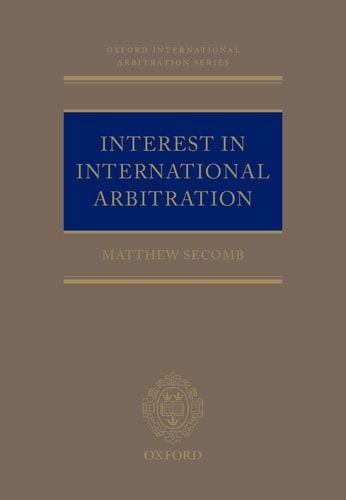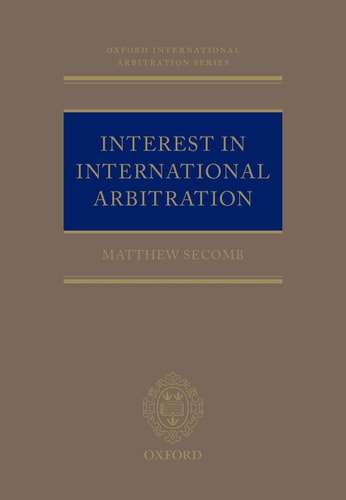
Interest in International Arbitration
0
0
As an Amazon Associate and affiliate partner, Menrva Books earns from qualifying purchases. Learn more
Author Description
Interest plays a vital and increasing role in international arbitration proceedings, with almost every case having an element of interest involved. However, until now, the topic has received very little attention, meaning that arbitrators have had very little concrete foundation on which to judge decisions on interest awards. This book is the first authoritative guidance to address this, providing a uniform approach to the awarding of interest in international arbitration. Interest in International Arbitration aligns arbitrators' decisions with standard commercial practice, offering a practical and logical approach to how interest should be awarded. It sets out traditional approaches that arbitrators have followed in the past, such as using conflict of law to apply a statutory rate from a given law, or awarding instead a subjectively 'reasonable' rate, and examines how these inconsistent approaches have resulted in a variety of awards and decisions. The author uses this analysis as a basis for a uniform approach to the issue: granting compound interest at appropriate rates unless constrained by truly mandatory law. The author sets out the calculation method, explores the benefits and limitations, and presents a thorough argument for the movement toward a uniform approach to interest awards.
Menrva's Summary
THE THESIS
This text investigates the lack of standardized methodology for awarding interest in international arbitration and proposes a uniform framework to address inconsistent decision-making. Matthew Secomb, a practitioner in international arbitration, utilizes an analysis of historical arbitration awards and conflict of law principles to argue for the adoption of compound interest as the standard practice. The book serves as a technical guide for arbitrators seeking to align their rulings with contemporary commercial expectations.
THE SCOPE MAP
What You Will Find
- Analysis of traditional interest calculation methods including statutory rates and subjective reasonableness.
- A proposed uniform framework for awarding compound interest.
- Examination of the benefits and limitations of various interest calculation models.
Scope Limits
- The text does not cover domestic litigation interest procedures outside the context of international arbitration.
- It does not address interest awards in cases where mandatory law strictly prohibits compound interest.
THE AUTHORITY PERSPECTIVE
Legal practitioners and arbitrators frequently cite this work as a foundational resource for navigating the complexities of interest awards in international disputes. Experts highlight the text for its practical utility in bridging the gap between inconsistent historical practices and modern commercial standards.
Page Count:
309
Publication Date:
2019-01-01
Publisher:
OUP Oxford
ISBN-10:
0191084921
ISBN-13:
9780191084928
Finance
Commercial law
Professional Career & Trade
Law