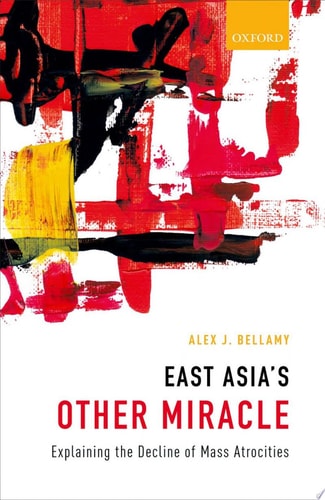
East Asia's Other Miracle
0
0
As an Amazon Associate and affiliate partner, Menrva Books earns from qualifying purchases. Learn more
Author Description
East Asia, Until Recently The Scene Of Widespread Blood-letting, Has Achieved Relative Peace. A Region That At The Height Of The Cold War Had Accounted For Around Eighty Percent Of The World's Mass Atrocities Has Experienced Such A Decline In Violence That By 2015 It Accounted For Less Than Five Percent. This Book Explains East Asia's 'other' Miracle And Asks Whether It Is Merely A Temporary Blip In The Historical Cycle Or The Dawning Of A New, And More Peaceful, Era For The Region. It Argues That The Decline Of Mass Atrocities In East Asia Resulted From Four Interconnected Factors: The Consolidation Of States And Emergence Of Responsible Sovereigns; The Prioritization Of Economic Development Through Trade; The Development Of Norms And Habits Of Multilateralism, And Transformations In The Practice Of Power Politics. Particular Attention Is Paid To North Korea And Myanmar, Countries Whose Experience Has Bucked Regional Trends Largely Because These States Have Not Succeeded In Consolidating Themselves To The Point Where They No Longer Depend On Violence To Survive. Although The Region Faces Several Significant Future Challenges, This Book Argues That The Much Reduced Incidence Of Mass Atrocities In East Asia Is Likely To Be Sustained Into The Foreseeable Future.
Menrva's Summary
THE THESIS
This book investigates the factors behind the significant decline of mass atrocities in East Asia since the Cold War and evaluates whether this trend represents a permanent shift toward regional stability. Author Alex J. Bellamy, a professor of international relations, utilizes historical data and political analysis to examine the transformation of East Asian security. He argues that the reduction in violence is not accidental but the result of four specific developments: state consolidation, a focus on economic trade, the growth of multilateral norms, and shifts in power politics. The text provides a framework for understanding how regional governance has evolved to prioritize survival through development rather than internal conflict.
THE SCOPE MAP
What You Will Find
- Analysis of the transition from high-conflict states to consolidated, responsible sovereigns.
- Examination of the role of regional multilateralism and trade-based economic development.
- Comparative case studies of North Korea and Myanmar as outliers to the regional trend.
- Evaluation of the long-term sustainability of peace in the region.
Scope Limits
- The analysis focuses primarily on mass atrocities rather than all forms of political violence.
- The study does not provide a comprehensive history of every individual nation in the region.
THE AUTHORITY PERSPECTIVE
Experts recognize this work as a significant contribution to the study of regional security and the prevention of mass atrocities. Readers frequently note the clarity of the author's four-factor framework and the logical depth of the comparative analysis regarding state consolidation.
Page Count:
352
Publication Date:
2017-01-01
Publisher:
Oxford University Press
ISBN-10:
019108378X
ISBN-13:
9780191083785
Asian History
Geopolitics
International relations
Conflict Studies
Community Tags
Other Editions(2)

Similar Books