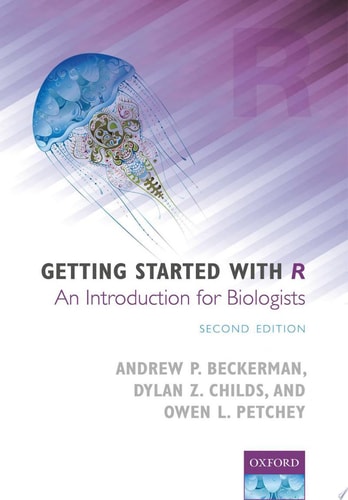
Getting Started With R
0
0
As an Amazon Associate and affiliate partner, Menrva Books earns from qualifying purchases. Learn more
Author Description
R Is Rapidly Becoming The Standard Software For Statistical Analyses, Graphical Presentation Of Data, And Programming In The Natural, Physical, Social, And Engineering Sciences. Getting Started With R Is Now The Go-to Introductory Guide For Biologists Wanting To Learn How To Use R In Their Research. It Teaches Readers How To Import, Explore, Graph, And Analyse Data, While Keeping Them Focused On Their Ultimate Goals: Clearly Communicating Their Data In Oral Presentations, Posters, Papers, And Reports. It Provides A Consistent Workflow For Using R That Is Simple, Efficient, Reliable, And Reproducible. This Second Edition Has Been Updated And Expanded While Retaining The Concise And Engaging Nature Of Its Predecessor, Offering An Accessible And Fun Introduction To The Packages Dplyr And Ggplot2 For Data Manipulation And Graphing. It Expands The Set Of Basic Statistics Considered In The First Edition To Include New Examples Of A Simple Regression, A One-way And A Two-way Anova. Finally, It Introduces A New Chapter On The Generalised Linear Model. Getting Started With R Is Suitable For Undergraduates, Graduate Students, Professional Researchers, And Practitioners In The Biological Sciences.
Menrva's Summary
THE THESIS
This book investigates the fundamental question of how researchers in the biological sciences can effectively integrate R into their statistical analysis and data communication workflows. The authors, Andrew P. Beckerman, Dylan Z. Childs, and Owen L. Petchey, leverage their academic expertise to provide a structured, reproducible framework for data manipulation and visualization. By focusing on practical application rather than abstract theory, the text aims to bridge the gap between raw data and professional scientific output.
THE SCOPE MAP
What You Will Find
- Introduction to R programming for data import, exploration, and graphing
- Practical tutorials on the Dplyr and Ggplot2 packages
- Coverage of basic statistical methods including simple regression, one-way ANOVA, and two-way ANOVA
- An introduction to the Generalised Linear Model
Scope Limits
- The text is specifically tailored to biological sciences and may not cover specialized applications in other fields
- It serves as an introductory guide and does not provide exhaustive coverage of advanced R programming or complex statistical theory
THE AUTHORITY PERSPECTIVE
Experts and educators frequently cite this text as a foundational resource for students and researchers transitioning into R-based workflows. Readers often note the clarity and accessibility of the prose, which successfully demystifies complex statistical concepts for those without a background in computer science.
Page Count:
240
Publication Date:
2017-01-01
Publisher:
Oxford University Press
ISBN-10:
0191091928
ISBN-13:
9780191091926
Science
Statistics
Programming
Data Science
Biology
Reference
Community Tags
Similar Books