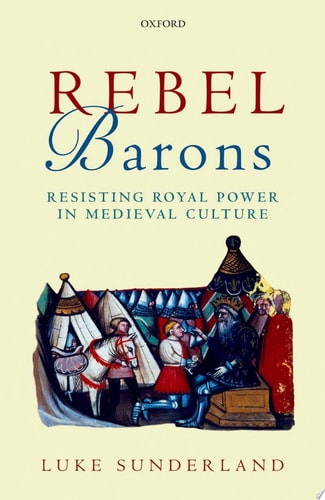
Rebel Barons
0
0
As an Amazon Associate and affiliate partner, Menrva Books earns from qualifying purchases. Learn more
Author Description
Ambivalence towards kings, and other sovereign powers, is deep-seated in medieval culture: sovereigns might provide justice, but were always potential tyrants, who usurped power and 'stole' through taxation. Rebel Barons writes the history of this ambivalence, which was especially acute in England, France, and Italy in the twelfth to fifteenth centuries, when the modern ideology of sovereignty, arguing for monopolies on justice and the legitimate use of violence, was developed. Sovereign powers asserted themselves militarily and economically provoking complex phenomena of resistance by aristocrats. This volume argues that the chansons de geste, the key genre for disseminating models of violent noble opposition to sovereigns, offer a powerful way of understanding acts of resistance. Traditionally seen as France's epic literary monuments - the Chanson de Roland is often presented as foundational of French literature - chansons de geste in fact come from areas antagonistic to France, such as Burgundy, England, Flanders, Occitania, and Italy, where they were reworked repeatedly from the twelfth century to the fifteenth and recast into prose and chronicle forms. Rebel baron narratives were the principal vehicle for aristocratic concerns about tyranny, for models of violent opposition to sovereigns and for fantasies of escape from the Carolingian world via crusade and oriental adventures. Rebel Barons reads this corpus across its full range of historical and geographical relevance, and through changes in form, as well as placing it in dialogue with medieval political theory, to bring out the contributions of literary texts to political debates. Revealing the widespread and long-lived importance of these anti-royalist works supporting regional aristocratic rights to feud and revolt, Rebel Barons reshapes our knowledge of reactions to changing political realities at a crux period in European history.
Menrva's Summary
THE THESIS
This book investigates the historical and political significance of the 'rebel baron' archetype in medieval literature as a reflection of aristocratic resistance to emerging sovereign power. Luke Sunderland, a scholar of medieval literature, utilizes a multidisciplinary approach that combines historical analysis with literary criticism. He argues that the chansons de geste served as a primary vehicle for articulating noble anxieties regarding tyranny and the centralization of authority in England, France, and Italy between the twelfth and fifteenth centuries.
THE SCOPE MAP
What You Will Find
- Analysis of the chansons de geste as political documents rather than mere epic monuments.
- Examination of the geographical spread of these narratives across Burgundy, Flanders, Occitania, and England.
- A comparative study of how these texts evolved from verse to prose and chronicle forms.
Scope Limits
- The study focuses primarily on the aristocratic perspective and does not extensively cover the viewpoints of the peasantry or urban merchant classes.
- It does not provide a comprehensive history of all medieval political theory, focusing instead on the specific intersection of literature and anti-royalist sentiment.
THE AUTHORITY PERSPECTIVE
Scholars in the field of medieval studies recognize this work for its rigorous integration of literary analysis with historical political theory. Readers frequently note the academic density of the prose, which provides a nuanced understanding of how medieval narratives functioned as active participants in contemporary political debates.
Page Count:
320
Publication Date:
2017-01-01
Publisher:
Oxford University Press
ISBN-10:
019109272X
ISBN-13:
9780191092725
History
European History
Literary Criticism
Political History
Community Tags
Other Editions(2)
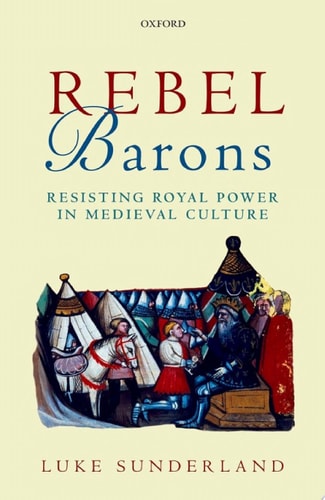
Similar Books












Reader Comments
Share Your Thoughts
No comments yet. Be the first to share your thoughts!