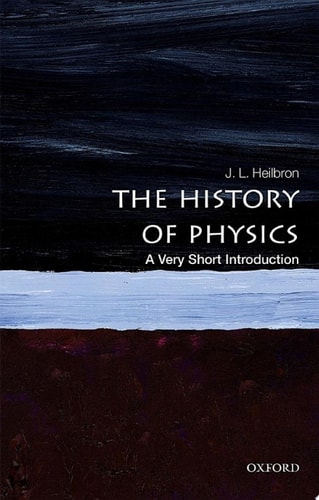
The History of Physics: A Very Short Introduction
0
0
As an Amazon Associate and affiliate partner, Menrva Books earns from qualifying purchases. Learn more
Author Description
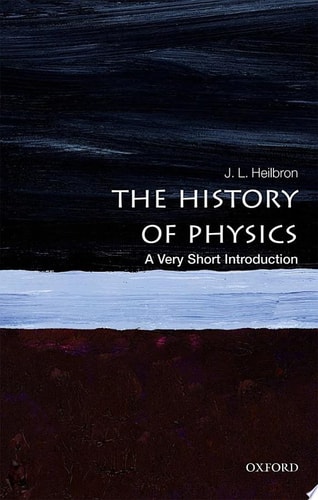
How does the physics we know today - a highly professionalised enterprise, inextricably linked to government and industry - link back to its origins as a liberal art in Ancient Greece? What is the path that leads from the old philosophy of nature and its concern with humankind's place in the universe to modern massive international projects that hunt down fundamental particles and industrial laboratories that manufacture marvels? This Very Short Introduction introduces us to Islamic astronomers and mathematicians calculating the size of the earth whilst their caliphs conquered much of it; to medieval scholar-theologians investigating light; to Galileo, Copernicus, Kepler, and Newton, measuring, and trying to explain, the universe. We visit the 'House of Wisdom' in 9th-century Baghdad; Europe's first universities; the courts of the Renaissance; the Scientific Revolution and the academies of the 18th century; and the increasingly specialised world of 20th and 21st century science. Highlighting the shifting relationship between physics, philosophy, mathematics, and technology - and the implications for humankind's self-understanding - Heilbron explores the changing place and purpose of physics in the cultures and societies that have nurtured it over the centuries. ABOUT THE SERIES: The Very Short Introductions series from Oxford University Press contains hundreds of titles in almost every subject area. These pocket-sized books are the perfect way to get ahead in a new subject quickly. Our expert authors combine facts, analysis, perspective, new ideas, and enthusiasm to make interesting and challenging topics highly readable.
Menrva's Summary
THE THESIS
This book investigates the historical evolution of physics from its origins as a liberal art in Ancient Greece to its current status as a highly professionalized, industrial, and government-linked enterprise. J. L. Heilbron, a historian of science, utilizes a chronological framework to trace the shifting relationship between physics, philosophy, mathematics, and technology. He examines how the discipline's purpose and cultural standing have transformed through key historical periods, including the Islamic Golden Age, the Scientific Revolution, and the modern era of international research projects.
THE SCOPE MAP
What You Will Find
- Historical survey from Ancient Greece to the 21st century
- Analysis of the intersection between physics, philosophy, and societal culture
- Examination of key figures including Galileo, Copernicus, Kepler, and Newton
- Contextualization of scientific development within the House of Wisdom and early universities
Scope Limits
- Does not provide technical derivations of physical laws
- Does not offer an exhaustive biography of every major physicist
THE AUTHORITY PERSPECTIVE
Readers frequently note the concise and accessible nature of this text, which effectively synthesizes complex historical shifts into a compact format. Experts highlight this as a useful introductory overview for students and general readers interested in the cultural history of scientific thought.
Page Count:
192
Publication Date:
2018-01-01
Publisher:
OUP Oxford
ISBN-10:
0191507059
ISBN-13:
9780191507052
History
Non-Fiction
Science
Science History
Earth Sciences
Academic
Physics history
Physics