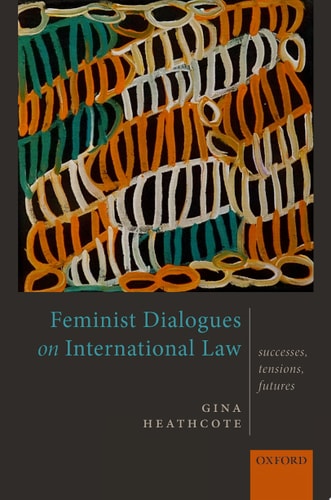
Feminist Dialogues on International Law
0
0
As an Amazon Associate and affiliate partner, Menrva Books earns from qualifying purchases. Learn more
Author Description
In The Past Decade, A Sense Of Feminist 'success' Has Developed Within The United Nations And International Law, Recognized In The Security Council Resolution 1325 On Women, Peace And Security, The Increased Jurisprudence On Gender Based Crimes In Armed Conflict From The Ictr/y And The Icc, The Creation Of Un Women, And Security Council Sanctions Against Perpetrators Of Sexual Violence In Armed Conflict. Contributing To The Development Of Feminist And Gender Scholarship On International Law, Gina Heathcote Provides A Feminist Analysis Of The Central Pillars Of International Law, Noting The Advances And Limitations Of Feminist Approaches. Through Incorporating Into Mainstream International Legal Studies Specific Critical And Feminist Narratives, This Book Considers The Manner In Which Feminist Thinking Has Changed International Law, And The Manner In Which International Law Has Remained Impervious To Key Feminist Dialogues. It Argues For A Return To Structural Bias Feminism That Engages The Foundations Of International Law And Uses Gender As A Method For Challenging Post-millennium Narratives On Fragmentation, The Role Of International Institutions, The Nature Of Legal Authority, Sovereignty, And The Role Of International Legal Experts.
Menrva's Summary
THE THESIS
This book investigates the extent to which feminist scholarship has successfully integrated into international law and the structural barriers that continue to limit its influence. Gina Heathcote, a scholar in international legal studies, evaluates the evolution of gender-based jurisprudence and institutional policy over the last decade. She argues that while specific advancements have occurred, a return to structural bias feminism is necessary to challenge the foundational nature of international legal authority and sovereignty.
THE SCOPE MAP
What You Will Find
- Analysis of UN Security Council Resolution 1325 and its implementation.
- Examination of gender-based crime jurisprudence from the ICTR, ICTY, and ICC.
- Critique of international legal institutions including the role of UN Women.
- Theoretical framework for structural bias feminism in legal studies.
Scope Limits
- The text does not provide a comprehensive history of all international law treaties.
- It focuses primarily on post-millennium developments rather than early 20th-century legal history.
THE AUTHORITY PERSPECTIVE
Experts recognize this work as a significant contribution to the critical legal studies field, noting its rigorous engagement with the limitations of current international institutions. Readers frequently highlight the author's ability to bridge the gap between abstract feminist theory and the practical application of international law.
Page Count:
240
Publication Date:
2019-01-01
Publisher:
Oxford University Press
ISBN-10:
0191508195
ISBN-13:
9780191508196
Feminist Theory
Gender Studies
International Law
Human rights
Community Tags
Similar Books