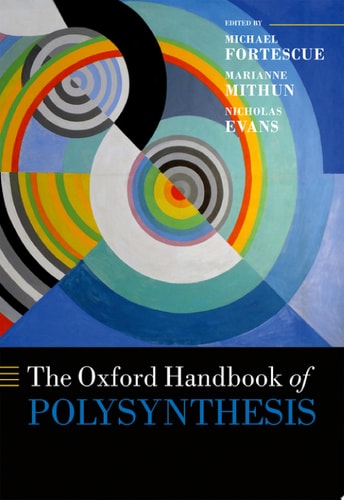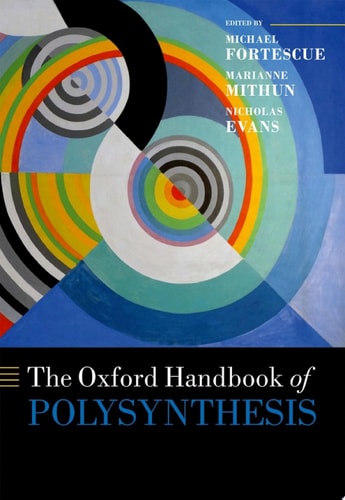
The Oxford Handbook of Polysynthesis
0
0
As an Amazon Associate and affiliate partner, Menrva Books earns from qualifying purchases. Learn more
Author Description
This handbook offers an extensive crosslinguistic and cross-theoretical survey of polysynthetic languages, in which single multi-morpheme verb forms can express what would be whole sentences in English. These languages and the problems they raise for linguistic analyses have long featured prominently in language descriptions, and yet the essence of polysynthesis remains under discussion, right down to whether it delineates a distinct, coherent type, rather than an assortment of frequently co-occurring traits. Chapters in the first part of the handbook relate polysynthesis to other issues central to linguistics, such as complexity, the definition of the word, the nature of the lexicon, idiomaticity, and to typological features such as argument structure and head marking. Part two contains areal studies of those geographical regions of the world where polysynthesis is particularly common, such as the Arctic and Sub-Arctic and northern Australia. The third part examines diachronic topics such as language contact and language obsolence, while part four looks at acquisition issues in different polysynthetic languages. Finally, part five contains detailed grammatical descriptions of over twenty languages which have been characterized as polysynthetic, with special attention given to the presence or absence of potentially criterial features.
Menrva's Summary
THE THESIS
This handbook investigates the structural and theoretical definition of polysynthesis, questioning whether it constitutes a distinct linguistic category or a collection of co-occurring traits. The editors, Marianne Mithun, Michael Fortescue, and Nicholas G. Evans, bring together a collection of expert contributions to analyze how multi-morpheme verb forms function across diverse language families. The text provides a comprehensive framework for understanding the complexities of these languages, moving beyond traditional definitions to explore the intersection of morphology, syntax, and diachronic change.
THE SCOPE MAP
What You Will Find
- Cross-linguistic and cross-theoretical surveys of polysynthetic languages
- Areal studies focusing on the Arctic, Sub-Arctic, and northern Australia
- Diachronic analysis of language contact and obsolescence
- Acquisition studies across various polysynthetic systems
- Detailed grammatical descriptions of over twenty specific languages
Scope Limits
- Does not provide a singular, universally accepted definition of polysynthesis
- Does not cover every known polysynthetic language in existence
THE AUTHORITY PERSPECTIVE
Experts identify this volume as a foundational reference for typological research and advanced linguistic study. Readers frequently note the academic density of the prose, which is tailored for researchers and graduate-level students in the field of linguistics.
Page Count:
1088
Publication Date:
2017-01-01
Publisher:
OUP Oxford
ISBN-10:
0191506206
ISBN-13:
9780191506208
Linguistics
Grammar
English
Reference
English & College Success
Academic