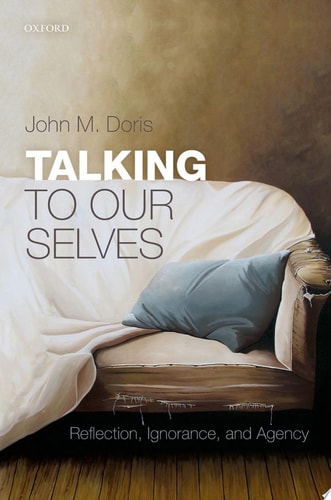
Talking to Our Selves
0
0
As an Amazon Associate and affiliate partner, Menrva Books earns from qualifying purchases. Learn more
Author Description
John M. Doris Presents A New Account Of Agency And Responsibility, Which Reconciles Our Understanding Of Ourselves As Moral Agents With Psychological Research On The Unconscious Mind. Much Philosophical Theorizing Maintains That The Exercise Of Morally Responsible Agency Consists In Judgment And Behavior Ordered By Accurate Reflection. On Such Theories, When Human Beings Are Able To Direct Their Lives In The Manner Philosophers Have Dignified With The Honorific 'agency', It's Because They Know What They're Doing, And Why They're Doing It. This Understanding Is Compromised By Quantities Of Psychological Research On Unconscious Processing, Which Suggests That Accurate Reflection Is Distressingly Uncommon; Very Often Behavior Is Ordered By Surprisingly Inaccurate Self-awareness. Thus, If Agency Requires Accurate Reflection, People Seldom Exercise Agency, And Skepticism About Agency Threatens. To Counter The Skeptical Threat, John M. Doris Proposes An Alternative Theory That Requires Neither Reflection Nor Accurate Self-awareness: He Identifies A Dialogic Form Of Agency Where Self-direction Is Facilitated By Exchange Of The Rationalizations With Which People Explain And Justify Themselves To One Another. The Result Is A Stoutly Interdisciplinary Theory Sensitive To Both What Human Beings Are Like—creatures With Opaque And Unruly Psychologies-and What They Need: An Account Of Agency Sufficient To Support A Practice Of Moral Responsibility.
Menrva's Summary
THE THESIS
How can human beings maintain moral responsibility and agency when psychological research consistently demonstrates that our behavior is often driven by unconscious processes rather than accurate self-reflection? John M. Doris, a professor of philosophy and cognitive science, addresses the tension between traditional philosophical models of agency and contemporary empirical findings. He argues that moral responsibility does not require perfect self-awareness or conscious deliberation, but rather functions through a social, dialogic process of justification and rationalization.
THE SCOPE MAP
What You Will Find
- A critique of traditional philosophical models that equate agency with accurate reflection.
- An integration of empirical psychological data regarding unconscious processing and cognitive biases.
- A proposed framework of 'dialogic agency' centered on interpersonal accountability.
Scope Limits
- The text does not provide a comprehensive manual for psychological self-improvement or therapy.
- It does not attempt to resolve all debates within the philosophy of mind regarding free will.
THE AUTHORITY PERSPECTIVE
Experts in moral philosophy and cognitive science recognize this work as a significant contribution to the debate on agency, noting its successful bridge between empirical science and normative ethics. Readers frequently observe that the prose is academically rigorous and requires a foundational understanding of philosophical discourse to fully grasp the author's arguments.
Page Count:
240
Publication Date:
2015-01-01
Publisher:
Oup Oxford
ISBN-10:
0191506486
ISBN-13:
9780191506482
Psychology
Philosophy
Moral Agency
Ethics
Community Tags
Similar Books