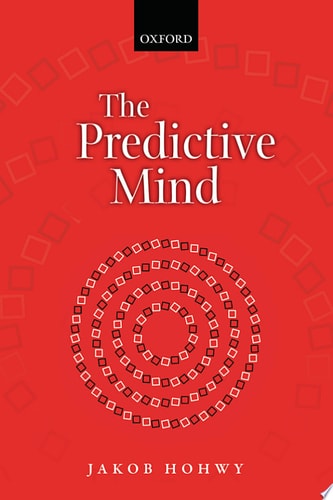
The Predictive Mind
0
0
As an Amazon Associate and affiliate partner, Menrva Books earns from qualifying purchases. Learn more
Author Description
A New Theory Is Taking Hold In Neuroscience. It Is The Theory That The Brain Is Essentially A Hypothesis-testing Mechanism, One That Attempts To Minimise The Error Of Its Predictions About The Sensory Input It Receives From The World. It Is An Attractive Theory Because Powerful Theoretical Arguments Support It, And Yet It Is At Heart Stunningly Simple. Jakob Hohwy Explains And Explores This Theory From The Perspective Of Cognitive Science And Philosophy. The Key Argument Throughout The Predictive Mind Is That The Mechanism Explains The Rich, Deep, And Multifaceted Character Of Our Conscious Perception. It Also Gives A Unified Account Of How Perception Is Sculpted By Attention, And How It Depends On Action. The Mind Is Revealed As Having A Fragile And Indirect Relation To The World. Though We Are Deeply In Tune With The World We Are Also Strangely Distanced From It. The First Part Of The Book Sets Out How The Theory Enables Rich, Layered Perception. The Theory's Probabilistic And Statistical Foundations Are Explained Using Examples From Empirical Research And Analogies To Different Forms Of Inference. The Second Part Uses The Simple Mechanism In An Explanation Of Problematic Cases Of How We Manage To Represent, And Sometimes Misrepresent, The World In Health As Well As In Mental Illness. The Third Part Looks Into The Mind, And Shows How The Theory Accounts For Attention, Conscious Unity, Introspection, Self And The Privacy Of Our Mental World.
Menrva's Summary
THE THESIS
This book investigates the theory that the human brain functions primarily as a hypothesis-testing mechanism dedicated to minimizing prediction errors regarding sensory input. Jakob Hohwy, a professor of philosophy, synthesizes research from cognitive science and neuroscience to argue that this predictive processing framework accounts for the complexity of conscious perception. He posits that our interaction with the world is mediated by a constant cycle of inference, which explains both our accurate perceptions and our susceptibility to misrepresentation.
THE SCOPE MAP
What You Will Find
- Probabilistic and statistical foundations of predictive processing
- Explanations of how attention and action shape perception
- Analysis of mental health conditions through the lens of predictive error
- Philosophical inquiries into selfhood, introspection, and conscious unity
Scope Limits
- The text does not provide a comprehensive clinical manual for treating specific psychiatric disorders
- It does not focus on the biological neuroanatomy of the brain at a cellular level
THE AUTHORITY PERSPECTIVE
Experts and academics frequently cite this work as a foundational text for understanding the predictive processing framework in cognitive science. Readers often note the academic density of the prose, which requires a background in philosophy or cognitive science to fully grasp the theoretical arguments presented.
Page Count:
288
Publication Date:
2013-01-01
Publisher:
Oxford University Press
ISBN-10:
0191505196
ISBN-13:
9780191505195
Psychology
Non-Fiction
Kognition
Philosophy of
Neuroscience
Community Tags
Other Editions(4)
Similar Books





Reader Comments
Share Your Thoughts
No comments yet. Be the first to share your thoughts!