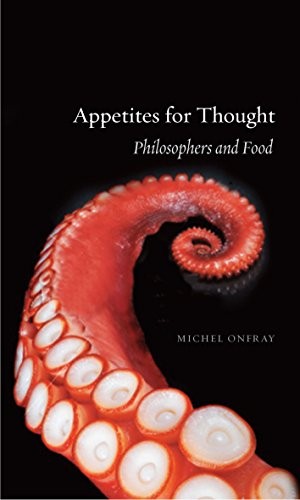
Appetites for Thought
0
0
As an Amazon Associate and affiliate partner, Menrva Books earns from qualifying purchases. Learn more
Author Description
"Offers up a delectable intellectual challenge: can we better understand the concepts of philosophers if we look at their culinary choices? Guiding us around the philosopher's banquet table with erudition, wit, and irreverence, Michel Onfray offers surprising insights on foods ranging from fillet of cod to barley soup, from sausage to wine and coffee. Tracing the edible obsessions of philosophers from Diogenes to Sartre, Onfray considers how their ideas relate to their diets. Would Diogenes have been an opponent of civilization without his taste for raw octopus? Would Rousseau have been such a proponent of frugality if his daily menu had included something more than dairy products? Nietzsche was grumpy about bad cooks and the retardation of human evolution, and Sartre was repelled by shellfish because they are 'food buried in an object, and you have to pry them out'"--Back cover.
Menrva's Summary
THE THESIS
This book investigates the surprising connections between the dietary habits and philosophical ideas of prominent thinkers throughout history. Michel Onfray, a renowned philosopher himself, guides readers through a culinary exploration of the minds of figures from Diogenes to Sartre. By examining their food preferences, from raw octopus to shellfish, Onfray posits that these appetites offer unique insights into their worldviews and intellectual frameworks. The book challenges conventional interpretations by linking philosophical concepts to the tangible, everyday act of eating.
THE SCOPE MAP
- Analysis of philosophers' dietary choices, from ancient Greece to the 20th century.
- Exploration of specific foods and their potential symbolic or conceptual links to philosophical ideas.
- Examination of thinkers such as Diogenes, Rousseau, Nietzsche, and Sartre.
- Erudite and irreverent tone, blending philosophical inquiry with culinary observation.
- Consideration of how food preferences might have influenced or reflected philosophical stances.
- Insights into the relationship between personal habits and intellectual output.
THE AUTHORITY PERSPECTIVE
The book is likely to appeal to readers interested in the intersection of philosophy and everyday life, offering a novel approach to understanding intellectual history. Onfray's characteristic erudition and irreverent style are expected to make the material engaging and thought-provoking. The premise suggests a work that challenges conventional academic approaches by grounding abstract ideas in concrete, sensory experiences. It aims to provide surprising insights by connecting the edible obsessions of philosophers to their broader conceptual frameworks.
Page Count:
136
Publication Date:
2015-01-01
ISBN-10:
1780234457
ISBN-13:
9781780234458
Philosophy
Non-Fiction
History
Community Tags
Similar Books