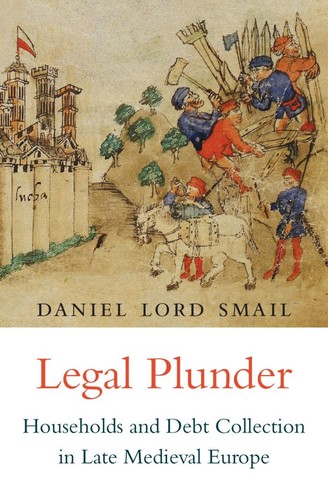
Legal Plunder
0
0
As an Amazon Associate and affiliate partner, Menrva Books earns from qualifying purchases. Learn more
Author Description
As Europe began to grow rich during the Middle Ages, its wealth materialized in the well-made clothes, linens, and wares of ordinary households. Such items were indicators of one’s station in life in a society accustomed to reading visible signs of rank. In a world without banking, household goods became valuable commodities that often substituted for hard currency. Pawnbrokers and resellers sprang up, helping to push these goods into circulation. Simultaneously, a harshly coercive legal system developed to ensure that debtors paid their due. Focusing on the Mediterranean cities of Marseille and Lucca, Legal Plunder explores how the newfound wealth embodied in household goods shaped the beginnings of a modern consumer economy in late medieval Europe. The vigorous trade in goods that grew up in the fourteenth and fifteenth centuries entangled households in complex relationships of credit and debt, and one of the most common activities of law courts during the period was debt recovery. Sergeants of the law were empowered to march into debtors’ homes and seize belongings equal in value to the debt owed. These officials were agents of a predatory economy, cogs in a political machinery of state-sponsored plunder. As Daniel Smail shows, the records of medieval European law courts offer some of the most vivid descriptions of material culture in this period, providing insights into the lives of men and women on the cusp of modern capitalism. Then as now, money and value were implicated in questions of power and patterns of violence.
Menrva's Summary
THE THESIS
The book investigates how the accumulation and circulation of household goods in late medieval Europe fueled the development of a consumer economy and shaped legal systems. Daniel Smail examines the Mediterranean cities of Marseille and Lucca, focusing on the 14th and 15th centuries when household items served as crucial indicators of social status and functioned as a form of currency. The text details the rise of pawnbrokers and resellers, and the concurrent development of a coercive legal framework for debt recovery, where law courts and legal officials played a central role in state-sponsored plunder of debtors' possessions. Smail argues that the records of these law courts provide unparalleled insights into the material culture and the lives of individuals on the cusp of modern capitalism, highlighting the enduring link between money, value, power, and violence.
THE SCOPE MAP
- Exploration of the Mediterranean cities of Marseille and Lucca during the 14th and 15th centuries.
- Analysis of household goods as indicators of social status and as a substitute for currency in a pre-banking society.
- Examination of the role of pawnbrokers and resellers in circulating goods.
- Detailed account of the legal system's development for debt recovery and enforcement.
- Description of the seizure of debtors' belongings by legal officials.
- Use of medieval law court records as primary sources for understanding material culture.
- Discussion of the entanglement of households in complex credit and debt relationships.
- Connection between money, value, power, and patterns of violence in late medieval Europe.
THE AUTHORITY PERSPECTIVE
The book is recognized for its detailed examination of material culture and economic practices in late medieval Europe, drawing on extensive legal records. It highlights the crucial role of household goods in the emergence of a consumer economy and the intertwined nature of law, debt, and power. The work is noted for its vivid descriptions derived from court documents, offering insights into the lives of ordinary people navigating the transition to early capitalism. It presents a compelling argument about the state's role in economic predation through legal means.
Page Count:
0
Publication Date:
2016-01-01
ISBN-10:
0674970128
ISBN-13:
9780674970120
History
Economics
Non-Fiction
Social History
Community Tags
Similar Books