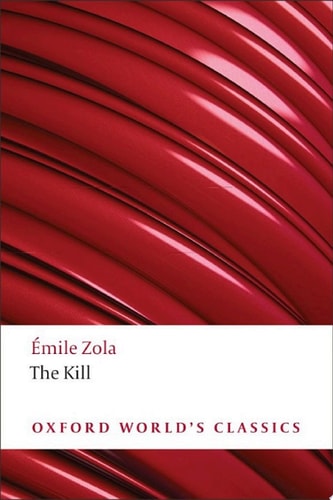
The Kill
0
0
As an Amazon Associate and affiliate partner, Menrva Books earns from qualifying purchases. Learn more
Author Description
It was the time when the rush for spoils filled a corner of the forest with the yelping of hounds, the cracking of whips, the flaring of torches. The appetites let loose were satisfied at last, shamelessly, amid the sound of crumbling neighbourhoods and fortunes made in six months. The city had become an orgy of gold and women. The Kill (La Curée) is the second volume in Zola's great cycle of twenty novels, Les Rougon-Macquart, and the first to establish Paris - the capital of modernity - as the centre of Zola's narrative world. Conceived as a representation of the uncontrollable 'appetites' unleashed by the Second Empire (1852-70) and the transformation of the city by Baron Haussmann, the novel combines into a single, powerful vision the twin themes of lust for money and lust for pleasure. The all-pervading promiscuity of the new Paris is reflected in the dissolute and frenetic lives of an unscrupulous property speculator, Saccard, his neurotic wife Renée, and her dandified lover, Saccard's son Maxime. About the series: For over 100 years Oxford World's Classics has made available the widest range of literature from around the globe. Each affordable volume reflects Oxford's commitment to scholarship, providing the most accurate text plus a wealth of other valuable features, including expert introductions by leading authorities, helpful notes to clarify the text, up-to-date bibliographies for further study, and much more.
Menrva's Summary
THE PULSE
The novel centers on the moral decay of the Second Empire in Paris, triggered by the unchecked greed of a property speculator and the resulting corruption of his family. Aristide Saccard, a ruthless financier, manipulates the urban transformation of Paris under Baron Haussmann to amass a fortune, while his wife, Renée, and his son, Maxime, engage in a destructive cycle of hedonism and incestuous desire. The narrative operates as a third-person critique of the era, utilizing the city itself as a mirror for the characters' internal and external corruption. The plot follows the logical progression of their social climbing and the inevitable collapse of their personal lives under the weight of their own appetites.
INSIDE THE PAGES
- Detailed depiction of the Haussmannization of Paris
- Exploration of the intersection between financial speculation and moral bankruptcy
- Use of the city as a central, active character in the narrative
- Examination of the Second Empire's social and political climate
- Focus on the psychological disintegration of the Saccard family
- Integration of themes regarding the commodification of human relationships
- Stylistic commitment to the principles of Naturalism
- Portrayal of the decadence and excess of the Parisian elite
THE COLLECTIVE ECHO
Readers and critics frequently highlight the novel's unflinching portrayal of the moral rot inherent in the Second Empire's rapid modernization. Discussion often centers on Zola's ability to link the physical destruction of old Paris with the psychological ruin of his characters. Many observers note that the pacing reflects the frenetic, unstable nature of the financial markets of the time. The work is widely recognized for its dense, descriptive prose that captures the atmosphere of a city in transition. Scholars often emphasize how the text serves as a foundational example of the Naturalist movement's focus on heredity and environment.
Page Count:
320
Publication Date:
2005-01-01
Publisher:
Ebsco Publishing
ISBN-10:
0191516953
ISBN-13:
9780191516955
Historical Fiction
French literature
Classic Literature
Realism
Social Commentary
Community Tags
Similar Books