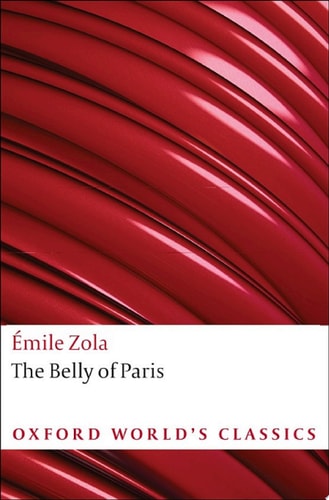
The Belly of Paris
0
0
As an Amazon Associate and affiliate partner, Menrva Books earns from qualifying purchases. Learn more
Author Description
'Respectable people... What bastards!' Unjustly deported to Devil's Island following Louis-Napoleon's coup-d'état in December 1851, Florent Quenu escapes and returns to Paris. He finds the city changed beyond recognition. The old Marché des Innocents has been knocked down as part of Haussmann's grand programme of urban reconstruction to make way for Les Halles, the spectacular new food markets. Disgusted by a bourgeois society whose devotion to food is inseparable from its devotion to the Government, Florent attempts an insurrection. Les Halles, apocalyptic and destructive, play an active role in Zola's picture of a world in which food and the injustice of society are inextricably linked. The Belly of Paris (Le Ventre de Paris) is the third volume in Zola's famous cycle of twenty novels, Les Rougon-Macquart. It introduces the painter Claude Lantier and in its satirical representation of the bourgeoisie and capitalism complements Zola's other great novels of social conflict and urban poverty. ABOUT THE SERIES: For over 100 years Oxford World's Classics has made available the widest range of literature from around the globe. Each affordable volume reflects Oxford's commitment to scholarship, providing the most accurate text plus a wealth of other valuable features, including expert introductions by leading authorities, helpful notes to clarify the text, up-to-date bibliographies for further study, and much more.
Menrva's Summary
THE PULSE
After escaping a penal colony, Florent Quenu returns to a transformed Paris only to find himself at odds with the gluttonous, politically complacent society thriving within the new Les Halles market. Florent seeks to navigate the shifting landscape of a city reconstructed under Haussmann’s urban planning, where the abundance of food serves as a symbol of bourgeois excess and political apathy. His objective to incite insurrection is met with the crushing weight of a society that prioritizes material comfort over revolutionary ideals. The narrative utilizes a third-person perspective to observe the sensory overload of the marketplace, contrasting the protagonist's moral rigidity against the chaotic, visceral environment of the food stalls. The story functions as a critique of the Second Empire, where the physical architecture of the market mirrors the moral decay of the ruling class.
INSIDE THE PAGES
- Detailed descriptions of the Les Halles market architecture
- Satirical characterizations of the Parisian bourgeoisie
- Exploration of the intersection between capitalism and food consumption
- Introduction of the recurring character Claude Lantier
- Use of sensory imagery to depict the abundance and rot of the market
- Examination of political disillusionment following the 1851 coup
- Contrast between the starving revolutionary and the well-fed middle class
- Integration of historical urban reconstruction as a central plot element
THE COLLECTIVE ECHO
Discussion often centers on Zola’s masterful use of the marketplace as a living, breathing entity that dictates the moral temperature of the novel. Readers frequently highlight the stark contrast between the vivid, almost overwhelming descriptions of food and the underlying themes of political betrayal and social stagnation. Critics often point to the novel's effectiveness in capturing the atmosphere of Second Empire Paris, noting how the setting functions as a primary antagonist to the protagonist. The balance between character development and the broader social critique remains a frequent topic of analysis for those examining the Rougon-Macquart cycle. Many readers find the depiction of the bourgeoisie to be particularly sharp, serving as a foundational example of Zola’s commitment to naturalistic observation.
Page Count:
319
Publication Date:
2007-01-01
Publisher:
OUP Oxford
ISBN-10:
0191604879
ISBN-13:
9780191604874
Historical Fiction
Classic Literature
English & College Success
Political fiction
English
Realism
French literature
Social Commentary