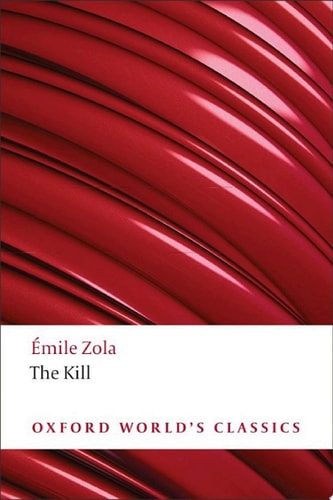
The Kill: La Curée
0
0
As an Amazon Associate and affiliate partner, Menrva Books earns from qualifying purchases. Learn more
Author Description
It was the time when the rush for spoils filled a corner of the forest with the yelping of hounds, the cracking of whips, the flaring of torches. The appetites let loose were satisfied at last, shamelessly, amid the sound of crumbling neighbourhoods and fortunes made in six months. The city had become an orgy of gold and women. The Kill (La Curée) is the second volume in Zola's great cycle of twenty novels, Les Rougon-Macquart, and the first to establish Paris - the capital of modernity - as the centre of Zola's narrative world. Conceived as a representation of the uncontrollable 'appetites' unleashed by the Second Empire (1852-70) and the transformation of the city by Baron Haussmann, the novel combines into a single, powerful vision the twin themes of lust for money and lust for pleasure. The all-pervading promiscuity of the new Paris is reflected in the dissolute and frenetic lives of an unscrupulous property speculator, Saccard, his neurotic wife Renée, and her dandified lover, Saccard's son Maxime. ABOUT THE SERIES: For over 100 years Oxford World's Classics has made available the widest range of literature from around the globe. Each affordable volume reflects Oxford's commitment to scholarship, providing the most accurate text plus a wealth of other valuable features, including expert introductions by leading authorities, helpful notes to clarify the text, up-to-date bibliographies for further study, and much more.
Menrva's Summary
THE PULSE
The rapid transformation of Paris under the Second Empire serves as the catalyst for a moral and financial collapse centered on the insatiable greed of the Saccard family. Aristide Saccard, a ruthless property speculator, navigates the chaotic urban renewal of Baron Haussmann to amass a fortune, while his wife, Renée, and his son, Maxime, become entangled in a web of decadence and illicit desire. The narrative follows their descent into moral bankruptcy as they attempt to satisfy their cravings within a city defined by corruption and excess. Zola employs a third-person perspective to meticulously document the intersection of private vice and public greed, framing the characters as products of their environment and heredity.
INSIDE THE PAGES
- Detailed depiction of the Haussmannization of Paris
- Exploration of the intersection between financial speculation and moral decay
- Characterization of the Second Empire as a period of unbridled appetite
- Use of the 'curée' metaphor to describe the scramble for wealth
- Examination of incestuous and transgressive domestic dynamics
- Focus on the influence of environment on human behavior
- Vivid sensory descriptions of urban construction and social gatherings
- Integration of historical context regarding 19th-century French politics
THE COLLECTIVE ECHO
Readers and critics frequently highlight Zola's clinical, almost surgical approach to dissecting the rot within the Parisian bourgeoisie. Discussion often centers on the effectiveness of the novel's central metaphor, which equates the city's physical reconstruction with the moral disintegration of its inhabitants. Many observers note the stark contrast between the opulent settings and the hollow, frenetic lives of the protagonists. The pacing is often described as deliberate, allowing the reader to fully absorb the suffocating atmosphere of the era. Scholars emphasize that this work remains a foundational text for understanding the Naturalist movement and its commitment to portraying the darker impulses of human nature.
Page Count:
317
Publication Date:
2005-01-01
Publisher:
OUP Oxford
ISBN-10:
0191604658
ISBN-13:
9780191604652
Historical Fiction
English
French literature
Social Commentary
Naturalism
English & College Success
Classic Literature
Community Tags
Similar Books