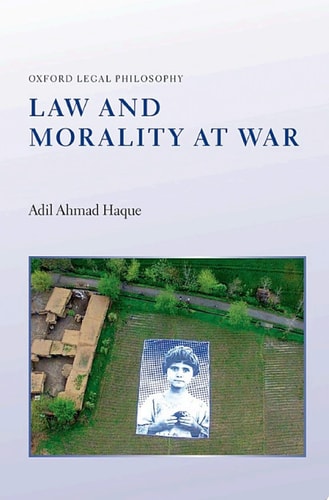
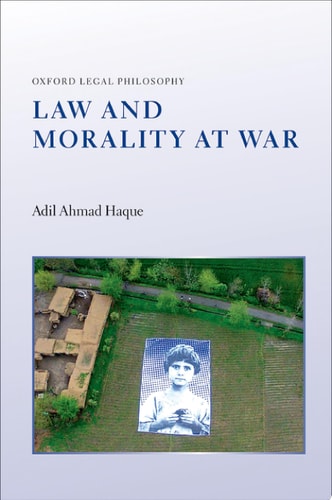
Law and Morality at War
0
0
As an Amazon Associate and affiliate partner, Menrva Books earns from qualifying purchases. Learn more
Author Description
The laws are not silent in war, but what should they say? What is the moral function of the law of armed conflict? Should the law protect civilians who do not fight but help those who do? Should the law protect soldiers who perform non-combat functions or who may be safely captured? How certain should a soldier be that an individual is a combatant rather than a civilian before using lethal force? What risks should soldiers take on themselves to avoid harming civilians? When do inaccurate weapons become unlawfully indiscriminate? When does 'collateral damage' to civilians become unlawfully disproportionate? Should civilians lose their legal rights by serving, voluntarily or involuntarily, as human shields? Finally, when should killing civilians constitute a war crime? These are the questions that Law and Morality at War answers, contributing to a cutting-edge international debate. Drawing on the concepts and methods of contemporary moral and legal philosophy, the book develops a normative framework within which the laws of war and international criminal law can be evaluated, criticized, and reformed. While several philosophical works critically examine the moral status of civilians and combatants, this book fills a gap, offering both an account of the laws of war and war crimes, and proposing how the law could be improved from a moral point of view.
Menrva's Summary
THE THESIS
This book investigates the moral function of the law of armed conflict and proposes a normative framework to evaluate, criticize, and reform international laws of war and criminal law. Adil Ahmad Haque, a scholar in legal philosophy, utilizes the methods of contemporary moral and legal theory to address the tension between military necessity and the protection of non-combatants. By examining the moral status of soldiers and civilians, the author constructs a systematic approach to determining when lethal force is justified and when it constitutes a war crime.
THE SCOPE MAP
What You Will Find
- A normative framework for evaluating international humanitarian law.
- Analysis of the distinction between combatants and civilians in modern warfare.
- Ethical criteria for assessing collateral damage and proportionality.
- Philosophical arguments regarding the legal rights of human shields and non-combatant support personnel.
Scope Limits
- The text does not provide a comprehensive historical survey of all past conflicts.
- It does not offer a tactical manual for military operations or field commanders.
THE AUTHORITY PERSPECTIVE
Scholars and legal practitioners frequently cite this work as a rigorous contribution to the philosophy of international law. Readers often note the high level of academic density and the precise, analytical nature of the prose.
Page Count:
299
Publication Date:
2017-01-01
Publisher:
OUP Oxford
ISBN-10:
0191511196
ISBN-13:
9780191511196
Philosophy
Law
War
Professional Career & Trade
Ethics
International Law
Community Tags
Other Editions(3)

Similar Books