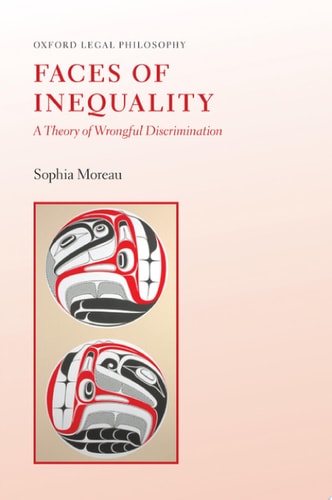
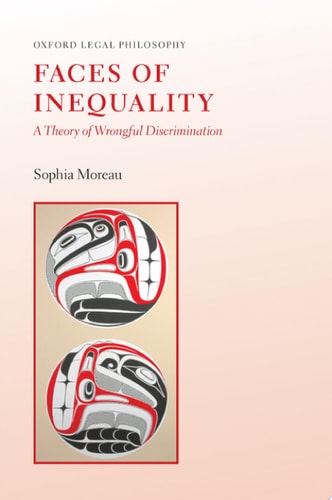
Faces of Inequality: A Theory of Wrongful Discrimination
0
0
As an Amazon Associate and affiliate partner, Menrva Books earns from qualifying purchases. Learn more
Author Description
This book defends an original and pluralist theory of when and why discrimination wrongs people. Starting from actual legal cases in which claimants have alleged wrongful discrimination by other people or by the state, Sophia Moreau argues that we can best understand these people's complaints by thinking of them as complaints about different ways in which they have not been treated as equals in their societies--in particular, through unfair subordination, through the violation of their right to a particular deliberative freedom, or through the denial to them of access to a basic good, that is, a good that this person must have access to if they are to be, and to be seen as, an equal in their society. The book devotes a chapter to each of these wrongs, exploring in detail what unfair subordination consists of; what deliberative freedoms are, and when each of us has a right to them; and what it means to deny someone access to a basic good. The author explains why these wrongs are each distinctive, but are each a different way of failing to treat some people as the equals of others. Finally the author argues that both the state and we as individuals have a duty to treat others as equals, in these three specific senses.
Menrva's Summary
THE THESIS
This book investigates the normative foundations of wrongful discrimination to determine why and when specific acts of differential treatment constitute a moral or legal wrong. Sophia Reibetanz Moreau, a professor of law and philosophy, constructs a pluralist framework that moves beyond traditional anti-discrimination models. By analyzing actual legal precedents, she argues that discrimination is best understood as a failure to treat individuals as equals through three distinct mechanisms: unfair subordination, the violation of deliberative freedom, and the denial of access to basic goods.
THE SCOPE MAP
What You Will Find
- A tripartite framework defining wrongful discrimination as subordination, deliberative freedom violation, or denial of basic goods.
- Philosophical analysis of the duties held by both the state and private individuals.
- Case-based methodology utilizing real-world legal claims to ground abstract theory.
Scope Limits
- The text focuses primarily on legal and moral philosophy rather than empirical sociological data or policy implementation strategies.
- The analysis is restricted to the specific three-part framework proposed by the author and does not provide an exhaustive survey of all existing anti-discrimination legal theories.
THE AUTHORITY PERSPECTIVE
Legal scholars and philosophers frequently cite this work as a significant contribution to the pluralist understanding of discrimination law. Readers often note the academic density of the prose, which is intended for an audience familiar with legal theory and moral philosophy.
Page Count:
272
Publication Date:
2020-01-01
Publisher:
Oxford University Press
ISBN-10:
0190927321
ISBN-13:
9780190927325
Philosophy
Ethics
Political Philosophy
Social justice
Professional Career & Trade
Legal Theory
Law
Law And Legislation
Community Tags
Other Editions(3)
Similar Books