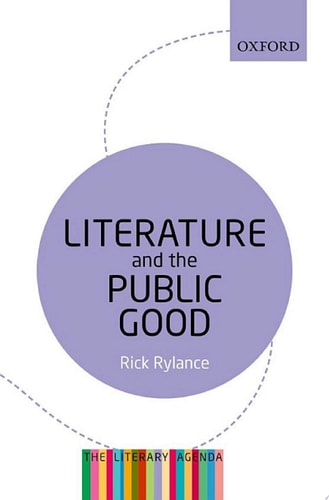
Literature and the Public Good: The Literary Agenda
0
0
As an Amazon Associate and affiliate partner, Menrva Books earns from qualifying purchases. Learn more
Author Description
The Literary Agenda is a series of short polemical monographs about the importance of literature and of reading in the wider world and about the state of literary education inside schools and universities. The category of 'the literary' has always been contentious. What is clear, however, is how increasingly it is dismissed or is unrecognised as a way of thinking or an arena for thought. It is sceptically challenged from within, for example, by the sometimes rival claims of cultural history, contextualized explanation, or media studies. It is shaken from without by even greater pressures: by economic exigency and the severe social attitudes that can follow from it; by technological change that may leave the traditional forms of serious human communication looking merely antiquated. For just these reasons this is the right time for renewal, to start reinvigorated work into the meaning and value of literary reading. Rick Rylance addresses the debate over the public value of literary studies in a book which starts from the widely-remarked predicament of the humanities in modern times. By comparison with science, technology, engineering, and mathematics, the humanities can be negatively characterised as at best optional extras; at worst, frivolous and wasteful. Funders and policy-makers can question their value in terms of utility, vocational prospects and intrinsic worth, while journalists and commentators predict extinction. So what is the justification for literature at the present time? Rylance argues that literature's value lies in its enormous public presence and its contribution to the public good. Far from being apologetic for our investment in literature, he argues for its value to all parts of our society from economic productivity to personal and social wellbeing. He examines discussion of literature's public role over time, taking in key moments of self-reflection such as Sir Philip Sidney's 'Defense of Poesy' (1581) and work by John Mill and Ruskin.
Menrva's Summary
THE THESIS
This book investigates the justification for the study of literature and its contribution to the public good within the context of modern economic and social pressures. Rick Rylance, a scholar of literary studies, examines the perceived decline of the humanities in relation to STEM fields. He argues that literature remains a vital component of societal health, productivity, and personal well-being, challenging the notion that literary education is an optional or frivolous pursuit.
THE SCOPE MAP
What You Will Find
- Historical analysis of the public role of literature from the 16th century to the present.
- A critique of current educational policies and funding priorities regarding the humanities.
- Theoretical frameworks connecting literary engagement to social and economic utility.
Scope Limits
- The text does not provide a comprehensive history of literary theory or a technical guide to literary analysis.
- It focuses primarily on the Western academic and public policy context rather than a global survey of literary education.
THE AUTHORITY PERSPECTIVE
Experts and academics recognize this work as a timely defense of the humanities that addresses the specific anxieties of contemporary higher education. Readers frequently note the accessible yet polemical nature of the prose, which serves as a foundational text for those advocating for the continued relevance of literary studies.
Page Count:
240
Publication Date:
2016-01-01
Publisher:
OUP Oxford
ISBN-10:
0191511765
ISBN-13:
9780191511769
Philosophy
English
Education
Humanities
Sociology
English & College Success
Literary Criticism
Community Tags
Similar Books