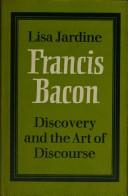
Francis Bacon
0
0
As an Amazon Associate and affiliate partner, Menrva Books earns from qualifying purchases. Learn more
Author Description
By modern standards Bacon's writings are striking in their range and diversity, and they are too often considered a separate specialist concerns in isolation from each other. Dr Jardine finds a unifying principle in Bacon's preoccupation with 'method', the evaluation and organisation of information as a procedure of investigation or of presentation. She shows how such an interpretation makes consistent (and often surprising) sense of the whole corpus of Bacon's writings: how the familiar but misunderstood inductive method for natural science relations to the more information strategies of argument in his historical, ethical, political and literary work. There is a substantial and valuable study of the intellectual Renaissance background from which Bacon emerged and against which he reacted. Through a series of details comparisons and contrasts we are led to appreciate the true originality and ingenuity of Bacon's own views and also to discount the more superficial resemblances between them and later developments in the philosophy of science. -- Publisher description.
Menrva's Summary
THE THESIS
Lisa Jardine presents a unifying principle in Francis Bacon's diverse writings through his preoccupation with 'method'. Jardine argues that Bacon's consistent focus on the evaluation and organization of information, whether for investigation or presentation, provides a coherent framework for understanding his entire body of work. The book examines the intellectual Renaissance background from which Bacon emerged, highlighting his reactions to it. Through detailed comparisons, the study aims to reveal the true originality and ingenuity of Bacon's views, while also distinguishing them from later developments in the philosophy of science.
THE SCOPE MAP
- A unifying principle in Francis Bacon's writings centered on 'method'.
- Analysis of Bacon's preoccupation with the evaluation and organization of information.
- Connections between Bacon's inductive method for natural science and his information strategies in historical, ethical, political, and literary work.
- A substantial study of the intellectual Renaissance background.
- Detailed comparisons and contrasts to appreciate Bacon's originality.
- Discounting superficial resemblances between Bacon's views and later philosophy of science.
THE AUTHORITY PERSPECTIVE
This biography and intellectual history offers a focused interpretation of Francis Bacon's work, emphasizing his concept of 'method' as a unifying theme. By connecting his scientific approaches to his broader writings, the book provides a novel perspective on his contributions. The study is noted for its detailed exploration of the Renaissance context and its careful differentiation of Bacon's thought from subsequent philosophical developments. The publisher description suggests a scholarly yet accessible approach to understanding Bacon's complex legacy.
Page Count:
267
Publication Date:
1974-01-01
ISBN-10:
0521204941
Biography
History
Philosophy
Non-Fiction
Community Tags
Similar Books