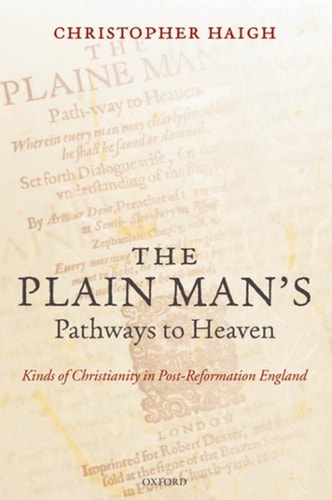
The Plain Man's Pathways to Heaven: Kinds of Christianity in Post-Reformation England, 1570-1640
0
0
As an Amazon Associate and affiliate partner, Menrva Books earns from qualifying purchases. Learn more
Author Description
What did ordinary people believe in post-Reformation England, and what did they do about it? This book looks at religious belief and practice through the eyes of five sorts of people: godly Protestant ministers, zealous Protestant laypeople, the ignorant, those who complained about the burdens of religion, and the Catholics. Based on 600 court and visitation books from three national and twelve local archives, it cites what people had to say about themselves, their religion, and the religions of others. How did people behave in church? What did they think of church rituals? What did they do on Sundays? What did they think of people of other faiths? How did they get along together, and what sort of issues produced tensions between them? What did parishioners think of their priests and what did the clergy think of their people? Was everyone seriously religious, or did some people mock or doubt religion? If these questions have been tackled before, it has usually been by way of claims about what the common people believed in books written by members of the educated ranks about their contemporaries. In contrast, by going directly to other sources of evidence such court records and parish complaints, this book illuminates what ordinary people actually said and did. Written by one of our leading historians of early modern England, it is a lively and readable account of popular religion in England under Elizabeth I and the early Stuarts, dealing with the results of the Reformation, reactions to official policy, and the background to the Civil Wars of the mid-17th century.
Menrva's Summary
THE THESIS
This book investigates the actual religious beliefs and practices of ordinary people in post-Reformation England between 1570 and 1640, challenging top-down historical narratives. Christopher Haigh, a prominent historian of early modern England, utilizes a vast collection of primary source material to reconstruct the lived experience of religion. By shifting the focus from the writings of the educated elite to the testimonies found in legal and administrative records, the author provides a granular analysis of how common parishioners navigated the shifting religious landscape of the Elizabethan and early Stuart eras.
THE SCOPE MAP
What You Will Find
- Analysis of religious behavior across five distinct social and ideological groups.
- Examination of church attendance, ritual participation, and Sunday observance.
- Evidence derived from 600 court and visitation books across fifteen archives.
Scope Limits
- The study is geographically confined to England and chronologically limited to the period between 1570 and 1640.
- It does not focus on the theological debates of high-ranking clergy or political leaders except as they directly impacted parish life.
THE AUTHORITY PERSPECTIVE
Historians frequently cite this work for its innovative use of archival court records to bypass the biases of contemporary polemical literature. Scholars note that the text provides a highly accessible yet rigorous examination of popular religion that remains a standard reference for the period.
Page Count:
320
Publication Date:
2007-01-01
Publisher:
Oxford University Press
ISBN-10:
0191527114
ISBN-13:
9780191527111
History
Reformation
Early Modern
Christianity
European History
Social History
Religious History
Great Britain
Community Tags
Similar Books