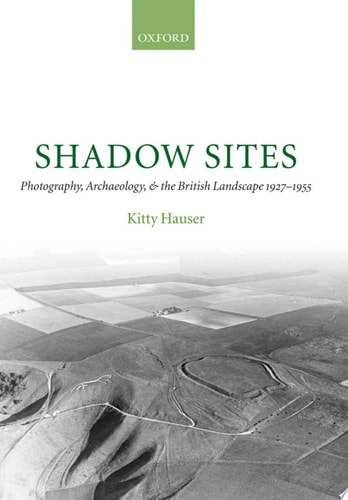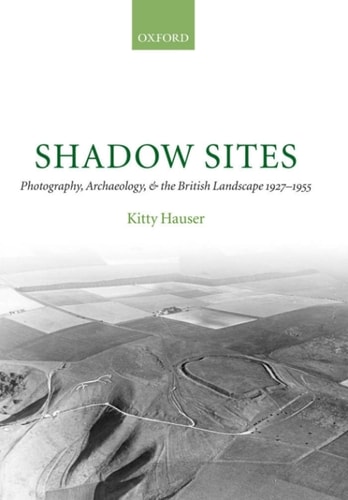
Shadow Sites: Photography, Archaeology, and the British Landscape 1927-1955
0
0
As an Amazon Associate and affiliate partner, Menrva Books earns from qualifying purchases. Learn more
Author Description
At certain times of the day - at sunrise, and sunset - the outlines of prehistoric fields, barrows and hill-forts in the British landscape may be thrown into relief. Such 'shadow sites', best seen from above, and captured by an airborne camera, are both examples of, and metaphors for, a particular way of seeing the landscape. At a time of rapid modernisation and urbanisation in mid-twentieth-century Britain, an archaeological vision of the British landscape reassured and enchanted a number of writers, artists, photographers, and film-makers. From John Piper, Eric Ravilious and Shell guide books, to photographs of bomb damage, aerial archaeology, and The Wizard of Oz, Kitty Hauser delves into evocative interpretations of the landscape and looks at the affinities between photography as a medium to capture traces of the past as well as their absence.
Menrva's Summary
THE THESIS
How did the emergence of aerial photography and archaeological discovery shape the perception of the British landscape during the mid-twentieth century? Kitty Hauser, an art historian, investigates the intersection of archaeology, modern technology, and visual culture between 1927 and 1955. She argues that the archaeological gaze provided a specific framework for interpreting the British landscape, serving as both a scientific tool and a cultural mechanism to navigate the anxieties of rapid modernization and urban expansion.
THE SCOPE MAP
What You Will Find
- Analysis of aerial photography techniques and their application in identifying prehistoric sites.
- Examination of the influence of archaeological imagery on mid-century British art, literature, and film.
- Case studies involving figures such as John Piper and Eric Ravilious.
- Exploration of the relationship between photography, memory, and the physical traces of the past.
Scope Limits
- The text focuses primarily on the British context and does not provide a global history of aerial archaeology.
- The analysis is restricted to the specific timeframe of 1927 to 1955.
THE AUTHORITY PERSPECTIVE
Scholars and critics frequently cite this work as a significant contribution to the study of visual culture and the history of landscape representation. Readers often note the academic density of the prose, which effectively bridges the gap between archaeological practice and art historical theory.
Page Count:
336
Publication Date:
2007-01-01
Publisher:
Oxford University Press
ISBN-10:
0191525650
ISBN-13:
9780191525650
History
Photography
Archaeology
European History
British History