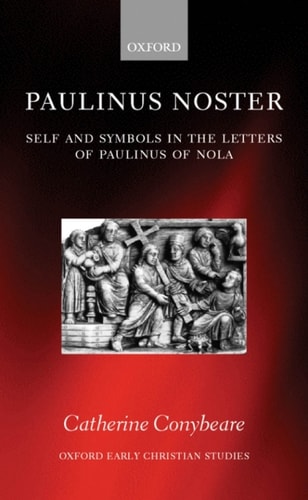
Paulinus Noster: Self and Symbols in the Letters of Paulinus of Nola
0
0
As an Amazon Associate and affiliate partner, Menrva Books earns from qualifying purchases. Learn more
Author Description
The aristocratic convert, Paulinus of Nola, was revered by contemporaries and correspondents, like Augustine of Hippo and Sulpicius Severus, as Paulinus noster - 'our Paulinus'. But his role as a shaper of, and exemplar to, the early Christian Church has, until recently, been often overlooked. This literate and accessible study examines the profound impact Paulinus had on Christian thought during a crucial period of its development. His ideas on friendship, Christian symbolism, and the nature of personal identity were produced on the cusp of the transition from the classical world to the burgeoning Western Christian civilization by a thinker with strong links to both. Paulinus' letters and other writings reveal the roots of many important strands of Christian thought; the works of Augustine and others attest to this influence. The letters of Paulinus and his correspondents portray an early Christian 'web' of shared concepts, intellectual discussion, and group development. Catherine Conybeare examines how the very process of writing and transmitting letters between members of a far-flung community helped to bind that community together and to aid the creation of ideas which would continue to reverberate for centuries after. 'Our Paulinus' was key to that group iconic as a model of behaviour, as a conversion success story, and as a intellectual contributor able to bridge the old world and the new.
Menrva's Summary
THE THESIS
This study investigates how the letters of Paulinus of Nola functioned as a mechanism for constructing personal identity and fostering intellectual cohesion within the early Christian community. Catherine Conybeare, a scholar of classical and early Christian literature, utilizes the correspondence between Paulinus and contemporaries such as Augustine of Hippo to argue that Paulinus served as a critical bridge between classical Roman culture and emerging Christian civilization. The work posits that the act of letter-writing itself was a foundational practice that allowed early Christian thinkers to develop shared symbols and concepts during a period of significant cultural transition.
THE SCOPE MAP
What You Will Find
- Analysis of the correspondence between Paulinus of Nola and figures like Sulpicius Severus and Augustine.
- Examination of the role of epistolary networks in early Christian community building.
- Discussion of the transition from classical rhetorical traditions to Christian intellectual frameworks.
Scope Limits
- The study does not provide a comprehensive biography of Paulinus outside of his intellectual and epistolary contributions.
- The analysis focuses primarily on the late antique period and does not extend into the later medieval reception of his work.
THE AUTHORITY PERSPECTIVE
Scholars recognize this text as a significant contribution to the study of late antique epistolary culture and the intellectual history of the early Church. Readers frequently note the academic density of the prose and the author's meticulous engagement with both classical and Christian source materials.
Page Count:
200
Publication Date:
2001-01-01
Publisher:
Clarendon Press
ISBN-10:
0191528935
ISBN-13:
9780191528934
History
Biography
Religion
Christianity
Theology
Church History
Community Tags
Similar Books