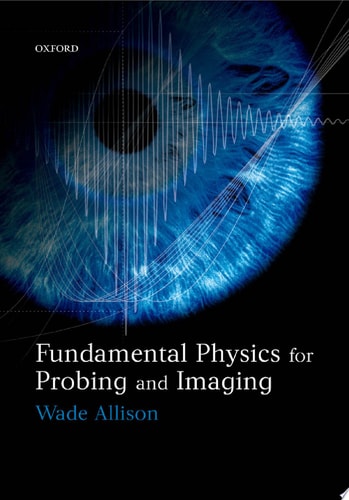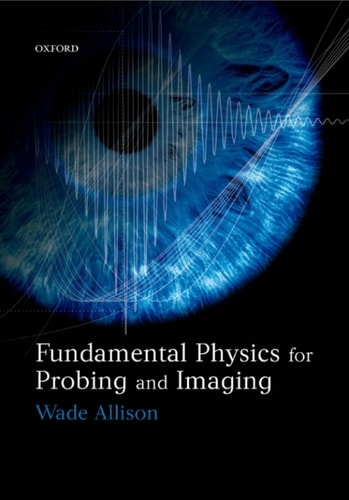
Fundamental Physics for Probing and Imaging
0
0
As an Amazon Associate and affiliate partner, Menrva Books earns from qualifying purchases. Learn more
Author Description
Physics has reduced fear and increased safety for society, largely by extending the power to see. The methods used are magnetic resonance, ionising radiation and sound, with their extensions. This textbook expounds the fundamental physics of these. It follows how they are applied by modern technology to "seeing" in clinical medicine including therapy and in other spheres of human activity such as archaeology, geophysics, security and navigation. By taking a broad view over the whole field, the book encourages comparisons, underlines the importance of public education and reaches fresh conclusions of some political importance concerning safety. This textbook has developed from a course given to third year students at Oxford and is written so that it can be used coherently as a basis for shorter courses by omitting certain chapters.
Menrva's Summary
THE THESIS
This text investigates the fundamental physical principles governing modern imaging technologies and their broader implications for public safety and societal advancement. Wade Allison, an academic at Oxford, synthesizes complex physical concepts into a coherent framework designed for advanced undergraduate study. The book argues that understanding the physics of radiation, sound, and magnetism is essential for both clinical medical applications and diverse fields such as security and archaeology.
THE SCOPE MAP
What You Will Find
- Principles of magnetic resonance, ionising radiation, and acoustic imaging
- Applications of imaging technology in clinical medicine and therapy
- Comparative analysis of imaging methods across fields like geophysics and navigation
- Discussions on the intersection of physics, public education, and political safety policy
Scope Limits
- The text is structured for third-year university students and assumes a baseline knowledge of physics
- It does not provide exhaustive technical manuals for specific hardware operation
THE AUTHORITY PERSPECTIVE
Readers frequently note the academic density of the prose, which reflects its origins as a specialized university course. Experts highlight this as a foundational text for students seeking to bridge the gap between theoretical physics and practical imaging applications.
Page Count:
352
Publication Date:
2006-01-01
Publisher:
OUP Oxford
ISBN-10:
0191525332
ISBN-13:
9780191525339
Science
Radiology
Applied Physics
Physics
Earth Sciences
Technology