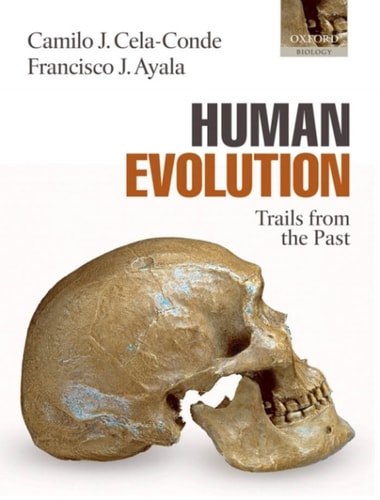
Human Evolution: Trails from the Past
0
0
As an Amazon Associate and affiliate partner, Menrva Books earns from qualifying purchases. Learn more
Author Description
Human Evolution provides a comprehensive overview of hominid evolution, synthesising data and approaches from fields as diverse as physical anthropology, evolutionary biology, molecular biology, genetics, archaeology, psychology and philosophy. The book starts with chapters on evolution, population genetics, systematics, and the methods for constructing evolutionary trees. These are followed by a comprehensive review of the fossil history of human evolution since our divergence from the apes. Subsequent chapters cover more recent data, both fossil and molecular, relating to the evolution of modern humans. A final section describes the evolution of culture, language, art, and morality. The authors are leading experts in two complementary fields of scholarship, physical anthropology and molecular evolution. Throughout the book they successfully integrate their expertise in evolutionary theory, phylogenetics, genomics, cultural evolution, language, aesthetics and morality to produce a cutting edge textbook, copiously illustrated and with an extensive and up-to-date bibliography. It will be suitable for both senior undergraduate and graduate level students taking courses on human evolution within departments of biology, anthropology, psychology and philosophy. The book will also appeal to a more general audience seeking a readable, up-to-date and inclusive treatment of human origins and evolution.
Menrva's Summary
THE THESIS
This text investigates the complex mechanisms and historical trajectory of hominid evolution by synthesizing multidisciplinary data. The authors, Camilo J. Cela-Conde and Francisco J. Ayala, leverage their extensive backgrounds in physical anthropology and molecular evolution to construct a cohesive framework. They integrate findings from genetics, archaeology, and philosophy to explain the biological and cultural development of the human species.
THE SCOPE MAP
What You Will Find
- Comprehensive review of fossil history from the divergence from apes to modern humans
- Methodologies for constructing evolutionary trees and population genetics
- Analysis of the evolution of culture, language, art, and morality
Scope Limits
- The text focuses primarily on hominid development rather than broader primate evolution
- It assumes a foundational understanding of biological principles suitable for senior undergraduate or graduate study
THE AUTHORITY PERSPECTIVE
Experts recognize this work as a rigorous, interdisciplinary textbook that effectively bridges the gap between biological data and philosophical inquiry. Readers frequently note the academic density of the prose, which serves as a foundational resource for students in biology and anthropology departments.
Page Count:
437
Publication Date:
2007-01-01
Publisher:
Oxford University Press
ISBN-10:
0191524433
ISBN-13:
9780191524431
Science
Anthropology
Genetics
textbook
Evolutionary Biology
Social Philosophy
Paleoanthropology
Community Tags
Similar Books