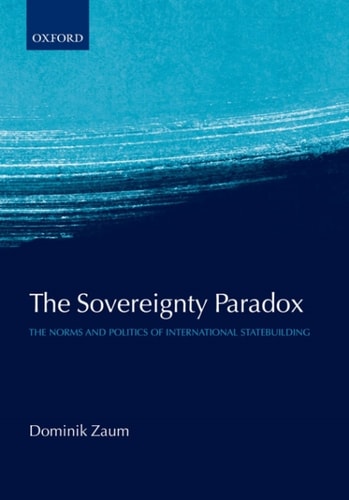
The Sovereignty Paradox: The Norms and Politics of International Statebuilding
0
0
As an Amazon Associate and affiliate partner, Menrva Books earns from qualifying purchases. Learn more
Author Description
The post-cold war years have witnessed an unprecedented involvement by the United Nations in the domestic affairs of states, to end conflicts and rebuild political and administrative institutions. International administrations established by the UN or Western states have exercised extensive executive, legislative, and judicial authority over post-conflict territories to facilitate institution building and provide for interim governance. This book is a study of the normative framework underlying the international community's statebuilding efforts. Through detailed case studies of policymaking by the international administrations in Bosnia and Herzegovina, Kosovo, and East Timor, based on extensive interviews and work in the administrations, the book examines the nature of this normative framework, and highlights how norms shape the institutional choices of statebuilders, the relationship between international and local actors, and the exit strategies of international administrations. The book argues that a particular conception of sovereignty as responsibility has influenced the efforts of international administrations, and shows that their statebuilding activities are informed by the idea that post-conflict territories need to meet certain normative tests before they are considered legitimate internationally. The restructuring of political and administrative practices to help post-conflict territories to meet these tests creates a sovereignty paradox: international administrations compromise one element of sovereignty - the right to self-government - in order to implement domestic reforms to legitimise the authority of local political institutions, and thus strengthen their sovereignty. In the light of the governance and development record of the three international administrations, the book assesses the promises and the pathologies of statebuilding, and develops recommendations to improve their performance.
Menrva's Summary
THE THESIS
This book investigates the normative framework and political contradictions inherent in international statebuilding efforts within post-conflict territories. Dominik Zaum, an expert in international relations and governance, utilizes a constructivist approach to analyze how the concept of 'sovereignty as responsibility' dictates the actions of international administrations. By examining the tension between external intervention and local self-governance, the author argues that statebuilding often undermines the very sovereignty it aims to establish.
THE SCOPE MAP
What You Will Find
- Analysis of the normative framework governing international statebuilding.
- Comparative case studies of Bosnia and Herzegovina, Kosovo, and East Timor.
- Examination of the relationship between international administrators and local political actors.
- Assessment of exit strategies and the long-term impact of institutional reforms.
Scope Limits
- The study focuses primarily on UN-led or Western-led international administrations rather than all forms of post-conflict reconstruction.
- It does not provide a comprehensive history of the conflicts themselves, focusing instead on the governance phase.
THE AUTHORITY PERSPECTIVE
Scholars and practitioners in the field of international relations frequently cite this work for its rigorous application of normative theory to the practical challenges of statebuilding. Experts highlight the book as a significant contribution to understanding the institutional paradoxes faced by international actors in post-conflict environments.
Page Count:
296
Publication Date:
2007-01-01
Publisher:
Oxford University Press
ISBN-10:
0191525863
ISBN-13:
9780191525865
Statebuilding
International relations
Governance
Sovereignty
Public Policy
Conflict Resolution
Community Tags
Similar Books