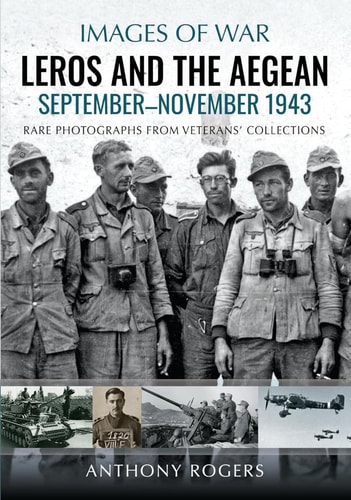
Leros and the Aegean - September-November 1943
0
0
As an Amazon Associate and affiliate partner, Menrva Books earns from qualifying purchases. Learn more
Author Description
In autumn 1943, the Dodecanese in the eastern Aegean was the setting for a series of German air-sea landings, something not normally associated with the Wehrmacht. Under heavy fire, landing craft ferried to shore German infantry and, more than two years after sustaining frightful losses in Crete, Fallschirmjäger were deployed in their intended role, parachuting on to the islands of Kos, Astipalaea and Leros. Both sides relied on aircraft and naval units, as well as conventional and unconventional ground forces. German paratroopers were drawn from the Luftwaffe and the special operations Division 'Brandenburg', which also fielded coastal raiders and assault troops. The Allies had on call 234 Infantry Brigade together with supporting units; a battalion of The Parachute Regiment, and Raiding Forces, which included the Long Range Desert Group, Special Boat Squadron, Commandos and Ieros Lohos (Greek Sacred Squadron). Two months of conflict would culminate in a five-day battle for possession of Leros, which ended with the surrender of the British-led garrison on 16 November 1943. The island of Samos was taken without a struggle a few days later. Unlike Operation Market Garden and the disaster of Arnhem one year later, the Aegean was first and foremost a British venture. As such, it may be considered the last irredeemable British defeat. For the Germans, the Aegean was a welcome reversal of recent setbacks and a final, but ultimately pointless, decisive victory: With the exception of Kastellorizo, key islands would remain under German occupation until May 1945.
Menrva's Summary
THE THESIS
The Dodecanese islands became the stage for a critical, yet often overlooked, German amphibious and airborne assault in the autumn of 1943. This campaign saw the Wehrmacht deploy specialized units, including paratroopers and coastal raiders, against Allied forces comprising British brigades, paratroopers, and various special forces units. The conflict, which involved air, naval, and ground combat, culminated in a fierce five-day battle for Leros, marking a significant British defeat in the Aegean theater.
THE SCOPE MAP
- Detailed account of German air-sea landings in the Dodecanese, specifically Kos, Astipalaea, and Leros.
- Analysis of the deployment and roles of German Fallschirmjäger (paratroopers) and the Division 'Brandenburg'.
- Examination of the Allied forces involved, including 234 Infantry Brigade, The Parachute Regiment, and various Raiding Forces like the Long Range Desert Group and Special Boat Squadron.
- Chronological narrative of the two-month conflict, culminating in the five-day Battle of Leros.
- Discussion of the strategic implications of the Aegean campaign for both Germany and the Allies, framed as a final British defeat.
- Contextualization of the Aegean campaign in relation to other major WWII operations like Operation Market Garden.
THE AUTHORITY PERSPECTIVE
This detailed historical account meticulously reconstructs the German amphibious and airborne operations in the Dodecanese during late 1943. It highlights the specialized units and tactics employed by both German and Allied forces, offering a comprehensive look at the campaign's progression and its ultimate outcome. The work positions the Battle of Leros as a significant, albeit often overshadowed, British defeat in the context of World War II.
Page Count:
160
Publication Date:
2026-02-28
Publisher:
Pen & Sword Books Limited
ISBN-10:
1805002007
ISBN-13:
9781805002000
Non-Fiction
History
Military History
Community Tags
Similar Books