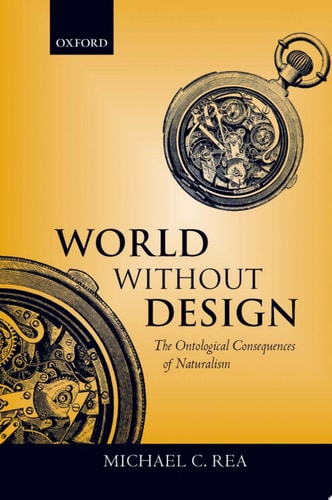
World Without Design: The Ontological Consequences of Naturalism
0
0
As an Amazon Associate and affiliate partner, Menrva Books earns from qualifying purchases. Learn more
Author Description
Philosophical naturalism, according to which philosophy is continuous with the natural sciences, has dominated the Western academy for well over a century; but Michael Rea claims that it is without rational foundation, and that the costs of embracing it are surprisingly high. The first part of World Without Design aims to provide a fair and historically informed characterization of naturalism. Rea then argues compellingly to the surprising conclusion that naturalists are committed to rejecting realism about material objects, materialism, and perhaps realism about other minds. This conclusion is striking, largely because naturalism is often simply identified with materialism, and the remaining two theses are ones that naturalists very typically want to endorse. Rea goes on to examine two alternative research programs: intuitionism and supernaturalism, and argues for the conclusion that intuitionism, under certain circumstances, is self-defeating. World Without Design offers a provocative challenge to philosophical orthodoxy. It will make uncomfortable reading for many philosophers.
Menrva's Summary
THE THESIS
Does philosophical naturalism possess a rational foundation, or does its commitment to scientific continuity necessitate the abandonment of core ontological beliefs? Michael C. Rea, a professor of philosophy, evaluates the internal consistency of naturalism by examining its historical development and logical implications. He argues that the naturalist framework forces proponents into counterintuitive positions, specifically the rejection of realism regarding material objects and other minds. By contrasting naturalism with intuitionism and supernaturalism, Rea seeks to expose the hidden costs of the prevailing academic orthodoxy.
THE SCOPE MAP
What You Will Find
- A historical characterization of philosophical naturalism and its relationship with the natural sciences.
- A logical analysis of the ontological commitments required by naturalist frameworks.
- A comparative study of alternative research programs, including intuitionism and supernaturalism.
- Arguments regarding the self-defeating nature of intuitionism under specific conditions.
Scope Limits
- The text does not provide a comprehensive defense of supernaturalism as a superior alternative.
- It does not address every variation of naturalism present in contemporary continental philosophy.
THE AUTHORITY PERSPECTIVE
Philosophers frequently note the technical density of the prose and the rigorous logical structure of Rea's arguments. Experts highlight this as a significant contribution to the debate on naturalism, often citing it as a challenging critique for those entrenched in the materialist tradition.
Page Count:
200
Publication Date:
2002-01-01
Publisher:
Clarendon Press
ISBN-10:
0191530085
ISBN-13:
9780191530081
Philosophy
Metaphysics
Epistemology
Naturalism
Academic Philosophy
Ontology
Community Tags
Similar Books