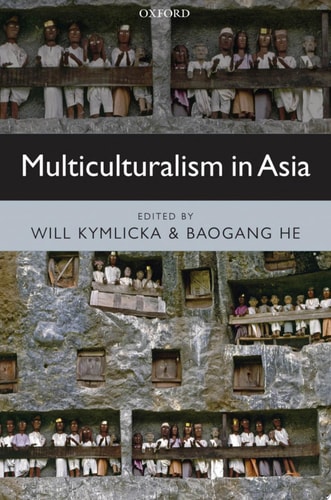
Multiculturalism in Asia
0
0
As an Amazon Associate and affiliate partner, Menrva Books earns from qualifying purchases. Learn more
Author Description
This volume explores the different ways that ethnic and religious diversity is conceptualized and debated in South and East Asia. In the first few decades following decolonization, talk of multiculturalism and pluralism was discouraged, as states attempted to consolidate themselves as unitary and homogenizing nation-states. Today, however, it is widely recognized that states in the region must come to terms with the enduring reality of ethnic and religious cleavages, and find new ways of accommodating and respecting diversity. As a result, many countries are now debating policies to accommodate minorities, including recognition of indigenous rights, minority language rights, consociational power-sharing, regional autonomy, and multination federalism. This is often described as a key ingredient in any process of democratization in the region. One manifestation of this new ethos is the growing rhetoric of 'multiculturalism', often imported from the West. And indeed Western models of minority rights have had an influence in many Asian countries, often promoted by international organizations. However, Asian societies also have their own traditions of peaceful coexistence amongst linguistic and religious groups. All of the major ethical and religious traditions in the region - from Confucian and Buddhist to Islamic and Hindu - have their own conceptions of tolerance, and their own recipes for sustaining unity amidst diversity. These traditions continue to shape people's beliefs and practices in the region. Even the distinctive conception of Marxism developed in the region provides an influential perspective on these issues not found in the West. The rhetoric of 'multiculturalism' may be ubiquitous around the world, but it is being used to express quite different ideas and norms. Using both case studies and thematic essays, this volume examines the pre-colonial traditions, colonial legacies, and post-colonial ideologies that influence contemporary debates on multicultural
Menrva's Summary
THE THESIS
This volume investigates how diverse Asian nations conceptualize and manage ethnic and religious pluralism in the wake of post-colonial state-building. Baogang He and Will Kymlicka, both established scholars in political theory and Asian governance, synthesize a range of regional perspectives to challenge the assumption that multiculturalism is a purely Western construct. They argue that while Western models influence contemporary policy, Asian states are simultaneously drawing upon indigenous religious, ethical, and Marxist traditions to forge unique frameworks for social cohesion.
THE SCOPE MAP
What You Will Find
- Comparative analysis of minority rights policies including consociational power-sharing and regional autonomy.
- Examination of pre-colonial, colonial, and post-colonial influences on national identity.
- Integration of diverse philosophical traditions including Confucian, Buddhist, Islamic, and Hindu perspectives.
- Case studies highlighting specific national approaches to ethnic and religious cleavages.
Scope Limits
- The text does not provide an exhaustive survey of every nation-state in Asia.
- It does not offer a singular, universal policy recommendation for all regional governments.
THE AUTHORITY PERSPECTIVE
Experts identify this work as a critical intervention in the study of global political theory, noting its success in de-centering Western-centric definitions of multiculturalism. Readers frequently highlight the academic rigor of the essays, which serve as a foundational resource for understanding the intersection of democratization and identity politics in Asia.
Page Count:
364
Publication Date:
2005-01-01
Publisher:
Oxford University Press
ISBN-10:
0191535117
ISBN-13:
9780191535116
Human rights
Asia
International relations
Sociology
Asian Studies
Cultural Anthropology
Community Tags
Similar Books