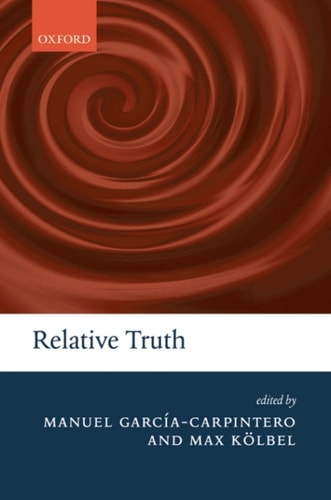
Relative Truth
0
0
As an Amazon Associate and affiliate partner, Menrva Books earns from qualifying purchases. Learn more
Author Description
The truth of an utterance depends on various factors. Usually these factors are assumed to be: the meaning of the sentence uttered, the context in which the utterance was made, and the way things are in the world. Recently, however, a number of cases have been discussed where there seems to be reason to think that the truth of an utterance is not yet fully determined by these three factors, and that truth must therefore depend on a further factor. The most prominent examples include utterances about values, utterances attributing knowledge, utterances that state that something is probable or epistemically possible, and utterances about the contingent future. In these cases, some have argued, the standard picture needs to be modified to admit extra truth-determining factors, and there is further controversy about the exact role of any such extra factors. With contributions from some of the key figures in the contemporary debate on relativism this book is about a topic that is the focus of much traditional and current interest: whether truth is relative to standards of taste, values, or subjective informational states. It is an issue in the philosophy of language, but one with important connections to other areas of philosophy, such as meta-ethics, metaphysics, and epistemology.
Menrva's Summary
THE THESIS
This volume investigates whether the truth of an utterance is determined solely by sentence meaning, context, and worldly facts, or if additional factors such as subjective standards are required. The editors, Manuel Garcia-Carpintero and Max Kölbel, curate a collection of essays from prominent philosophers to address the challenges posed by relativism. The text examines how truth-value assessments shift when applied to values, knowledge attributions, probability, and future contingents, ultimately questioning the adequacy of the traditional semantic framework.
THE SCOPE MAP
What You Will Find
- Analysis of truth-relativism regarding taste, values, and epistemic states
- Theoretical frameworks for evaluating utterances about the contingent future
- Philosophical arguments concerning the intersection of language and meta-ethics
Scope Limits
- The text does not provide a unified theory of truth but rather explores the ongoing debate between competing perspectives
- It assumes a foundational knowledge of contemporary analytic philosophy and semantic theory
THE AUTHORITY PERSPECTIVE
Experts identify this collection as a significant resource for scholars engaged in the contemporary debate on semantic relativism. Readers frequently note the academic density of the prose, which is intended for an audience familiar with advanced topics in the philosophy of language.
Page Count:
336
Publication Date:
2008-01-01
Publisher:
OUP Oxford
ISBN-10:
0191552976
ISBN-13:
9780191552977
Philosophy
Mind & Body
Metaethics
Philosophy of
Epistemology
Metaphysics
Community Tags
Similar Books