
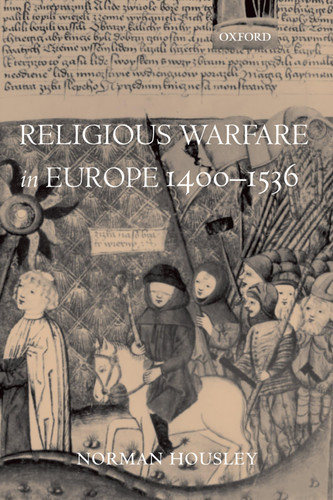
Religious Warfare in Europe 1400-1536
0
0
As an Amazon Associate and affiliate partner, Menrva Books earns from qualifying purchases. Learn more
Author Description
Religious warfare has been a recurrent feature of European history. In this intelligent and readable study, the distinguished Crusade historian Norman Housley describes and analyses the principal expressions of holy war in the period from the Hussite wars to the first generation of the Reformation. The context was one of both challenge and expansion. The Ottoman Turks posed an unprecedented external threat to the 'Christian republic', while doctrinal dissent, constant warfare between states, and rebellion eroded it from within. Professor Housley shows how in these circumstances the propensity to sanctify warfare took radically different forms. At times warfare between national communities was shaped by convictions of 'sacred patriotism', either in defending God-given native land or in the pursuit of messianic programmes abroad. Insurrectionary activity, especially when driven by apocalyptic expectations, was a second important type of religious war. In the 1420s and early 1430s the Hussites waged war successfully in defence of what they believed to be 'God's Law'. And some frontier communities depicted their struggle against non-believers as religious war by reference to crusading ideas and habits of thought. Professor Housley pinpoints what these conflicts had in common in the ways the combatants perceived their own role, their demonization of their opponents, and the ongoing critique of religious war in all its forms. This is a major contribution to both Crusade history and the study of the Wars of Religion of the early modern period. Professor Housley explores the interaction between Crusade and religious war in the broader sense, and argues that the religious violence of the sixteenth and seventeenth centuries was organic, in the sense that it sprang from deeply rooted proclivities within European society.
Menrva's Summary
THE THESIS
This study investigates the evolution and manifestation of holy war in Europe between 1400 and 1536, questioning how religious conviction transformed military conflict during a period of intense geopolitical and doctrinal instability. Norman Housley, a distinguished historian of the Crusades, utilizes a broad range of historical evidence to examine how external threats from the Ottoman Empire and internal pressures from the Reformation shaped the sanctification of violence. He argues that religious warfare during this era was not an aberration but an organic development rooted in the social and ideological structures of the time.
THE SCOPE MAP
What You Will Find
- Analysis of the Hussite Wars and their influence on insurrectionary religious conflict.
- Examination of the intersection between crusade ideology and early modern state warfare.
- Exploration of apocalyptic expectations and their role in driving military action.
- Comparative study of how combatants demonized opponents and justified violence through 'sacred patriotism'.
Scope Limits
- The analysis is strictly bounded by the period from 1400 to 1536.
- The text focuses primarily on European contexts and does not provide an exhaustive global history of religious conflict.
THE AUTHORITY PERSPECTIVE
Scholars recognize this work as a significant contribution to the study of the transition from medieval crusading traditions to early modern religious wars. Readers frequently note the academic rigor and clarity with which Housley connects disparate conflicts into a cohesive historical framework.
Page Count:
248
Publication Date:
2008-01-01
Publisher:
OUP Oxford
ISBN-10:
0191564508
ISBN-13:
9780191564505
History
Europe
Religious History
Military History
Reformation
Military Science
Crusades
European History
Community Tags
Other Editions(3)

Similar Books










Reader Comments
Share Your Thoughts
No comments yet. Be the first to share your thoughts!