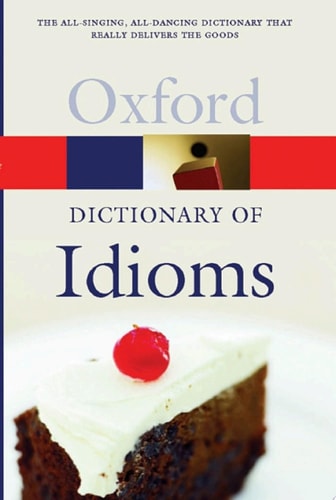
The Oxford Dictionary of Idioms
0
0
As an Amazon Associate and affiliate partner, Menrva Books earns from qualifying purchases. Learn more
Author Description
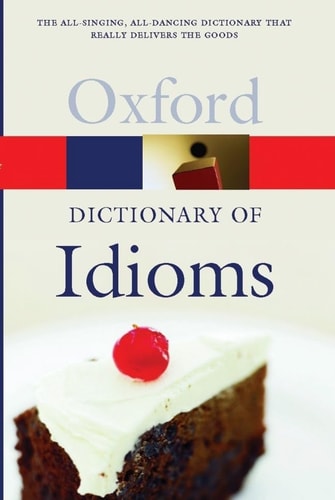
Did you know that 'flavour of the month' originated in a marketing campaign in American ice-cream parlours in the 1940s, when a particular flavour would be specially promoted for a month at a time? And did you know that 'off the cuff' refers to the rather messy practice of writing impromptu notes on one's shirt cuff before speaking in public? These and many more idioms are explained and put into context in this second edition of the Oxford Dictionary of Idioms. This vastly entertaining dictionary takes a fresh look at the idiomatic phrases and sayings that make English such a rich and intriguing language. A major new edition, it contains entries for over 5000 idioms, including 350 new entries and over 500 new quotations. The text has been updated to include many new idioms using the findings of the Oxford English Reading Programme, the biggest language research programme in the world. The entries are supported by a wealth of illustrative quotations from a wide range of sources and periods. For example: 'Rowling has not been asleep at the wheel in the three years since the last Potter novel, and I am pleased to report that she has not confused sheer length with inspiration.' - Guardian, 2003. 'I made the speech of a lifetime. I had them tearing up the seats and rolling in the aisles.' - P.G. Woodhouse, 1940. Many entries include boxed features which give more detailed background on the idiom in question. For example, did you know that 'taken aback' was adopted from nautical terminology, and described a ship unable to move forward because of a strong headwind pressing its sails back against the mast? The text has been entirely redesigned so that it is both elegant and easy to use. Anyone interested in the quirky side of the English language will have hours of fun browsing through this fascinating and informative volume.
Menrva's Summary
THE THESIS
This volume investigates the historical origins, semantic evolution, and contextual usage of over 5,000 English idiomatic expressions. Judith Siefring, an experienced lexicographer, utilizes the extensive data gathered by the Oxford English Reading Programme to provide a comprehensive analysis of how figurative language functions within the English lexicon. The text serves as both a reference tool and a historical record of linguistic development.
THE SCOPE MAP
What You Will Find
- Over 5,000 entries covering a wide range of English idioms and sayings.
- Etymological explanations for phrases derived from nautical, historical, and cultural contexts.
- Illustrative quotations from diverse literary and journalistic sources spanning multiple decades.
Scope Limits
- The dictionary focuses primarily on established English idioms and does not cover slang or regional dialects in exhaustive detail.
THE AUTHORITY PERSPECTIVE
Experts and linguists recognize this work as a standard reference for understanding the nuances of English figurative language. Readers frequently note the accessibility of the entries, which balance academic rigor with engaging historical anecdotes.
Page Count:
346
Publication Date:
2004-01-01
Publisher:
OUP Oxford
ISBN-10:
019157953X
ISBN-13:
9780191579530
Etymology
Reference
Language
Dictionaries
Linguistics
Slang & Idioms