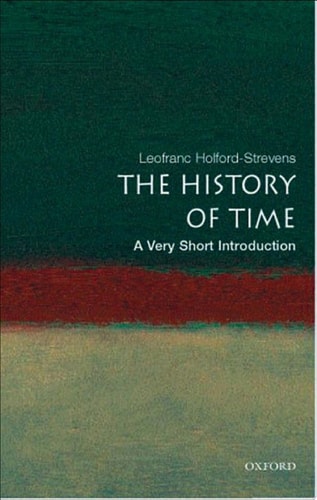
The History of Time: A Very Short Introduction
0
0
As an Amazon Associate and affiliate partner, Menrva Books earns from qualifying purchases. Learn more
Author Description
Why do we measure time in the way that we do? Why is a week seven days long? At what point did minutes and seconds come into being? Why are some calendars lunar and some solar? The organisation of time into hours, days, months and years seems immutable and universal, but is actually far more artificial than most people realise. The French Revolution resulted in a restructuring of the French calendar, and the Soviet Union experimented with five and then six-day weeks. Leofranc Holford-Strevens explores these questions using a range of fascinating examples from Ancient Rome and Julius Caesar's imposition of the Leap Year, to the 1920s' project for a fixed Easter. ABOUT THE SERIES: The Very Short Introductions series from Oxford University Press contains hundreds of titles in almost every subject area. These pocket-sized books are the perfect way to get ahead in a new subject quickly. Our expert authors combine facts, analysis, perspective, new ideas, and enthusiasm to make interesting and challenging topics highly readable.
Menrva's Summary
THE THESIS
This book investigates the origins and cultural evolution of the systems humans use to measure and organize time. Leofranc Holford-Strevens, a scholar of classical antiquity, examines the historical development of calendars, weeks, and timekeeping units. He argues that our current temporal structures are not immutable natural laws but rather social constructs shaped by political, religious, and administrative decisions throughout history.
THE SCOPE MAP
What You Will Find
- Historical analysis of calendar systems including lunar and solar models
- Case studies on the French Revolutionary calendar and Soviet week experiments
- Examination of the Roman origins of the Leap Year
- Discussion on the standardization of hours, minutes, and seconds
Scope Limits
- The text does not provide a technical manual for modern horology or clock-making mechanisms
- It focuses primarily on Western and Mediterranean historical traditions rather than a global survey of all indigenous timekeeping systems
THE AUTHORITY PERSPECTIVE
Readers frequently note the academic density of the prose, which remains accessible due to the author's clear organizational structure. Experts highlight this as a foundational text for beginners interested in the intersection of history and chronometry.
Page Count:
144
Publication Date:
2005-01-01
Publisher:
OUP Oxford
ISBN-10:
0191578002
ISBN-13:
9780191578007
History
Science
Non-Fiction
Chronology
Reference
Community Tags
Similar Books