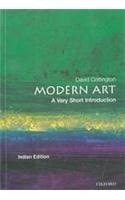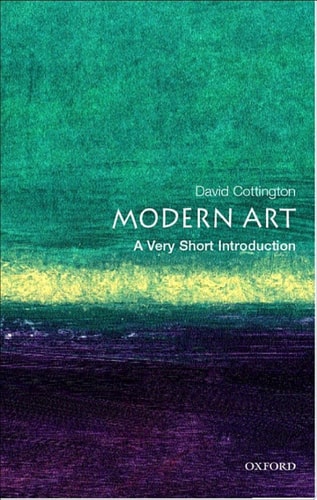
Modern Art: A Very Short Introduction
0
0
As an Amazon Associate and affiliate partner, Menrva Books earns from qualifying purchases. Learn more
Author Description
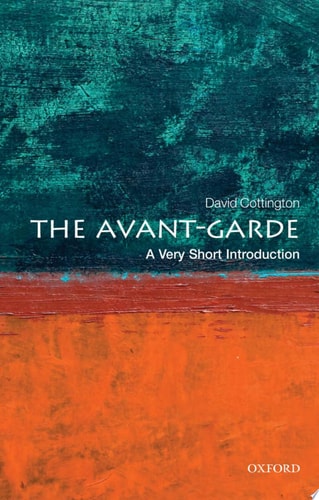
As public interest in modern art continues to grow, as witnessed by the spectacular success of Tate Modern and the Bilbao Guggenheim, there is a real need for a book that will engage general readers, offering them not only information and ideas about modern art, but also explaining its contemporary relevance and history. This book achieves all this and focuses on interrogating the idea of 'modern' art by asking such questions as: What has made a work of art qualify as modern (or fail to)? How has this selection been made? What is the relationship between modern and contemporary art? Is 'postmodernist' art no longer modern, or just no longer modernist - in either case, why, and what does this claim mean, both for art and the idea of 'the modern'? Cottington examines many key aspects of this subject, including the issue of controversy in modern art, from Manet's Dejeuner sur L'Herbe (1863) to Picasso's Les Demoiselles, and Tracey Emin's Bed, (1999); and the role of the dealer from the main Cubist art dealer Kahnweiler to Charles Saatchi. ABOUT THE SERIES: The Very Short Introductions series from Oxford University Press contains hundreds of titles in almost every subject area. These pocket-sized books are the perfect way to get ahead in a new subject quickly. Our expert authors combine facts, analysis, perspective, new ideas, and enthusiasm to make interesting and challenging topics highly readable.
Menrva's Summary
THE THESIS
This book investigates the criteria and historical processes that define a work of art as 'modern' while examining the shifting boundaries between modern, modernist, and contemporary art. David Cottington, a professor of art history, utilizes a critical framework to analyze how institutional selection and market forces shape the canon of modern art. By tracing the evolution of the term from the 19th century to the present, he provides a structured inquiry into why certain works gain status while others are excluded.
THE SCOPE MAP
What You Will Find
- Historical analysis of art movements from the 1860s to the late 20th century.
- Examination of the influence of art dealers and institutions on artistic value.
- Discussion of controversial works including pieces by Manet, Picasso, and Tracey Emin.
Scope Limits
- The text does not provide a comprehensive biographical survey of every major modern artist.
- It does not offer a technical manual for art creation or aesthetic evaluation.
THE AUTHORITY PERSPECTIVE
Readers frequently note the academic density of the prose, which manages to condense complex art historical theories into a concise format. Experts highlight this as a foundational text for beginners seeking to understand the institutional and cultural mechanisms behind modern art history.
Page Count:
169
Publication Date:
2005-01-01
Publisher:
OUP Oxford
ISBN-10:
0191577820
ISBN-13:
9780191577826
Non-Fiction
Art History
Humanities
Criticism
Modern Art