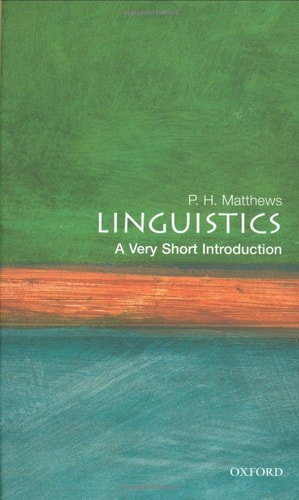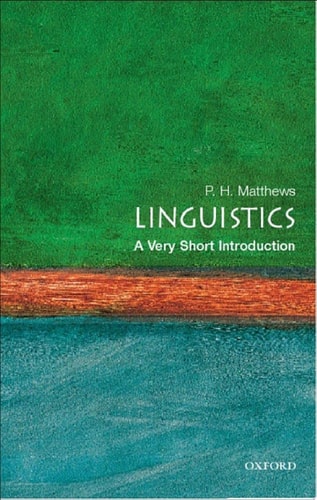
Linguistics: A Very Short Introduction
0
0
As an Amazon Associate and affiliate partner, Menrva Books earns from qualifying purchases. Learn more
Author Description
Linguistics falls in the gap between arts and science, on the edges of which the most fascinating discoveries and the most important problems are found. Rather than following the conventional organization of many contemporary introductions to the subject, the author of this stimulating guide begins his discussion with the oldest, 'arts' end of the subject and moves chronologically through to the newest research - the 'science' aspects. A series of short thematic chapters look in turn at such areas as the prehistory of languages and their common origins, language and evolution, language in time and space (the nature of change inherent in language), grammars and dictionaries (how systematic is language?), and phonetics. Explication of the newest discoveries pertaining to language in the brain completes the coverage of all major aspects of linguistics from a refreshing and insightful angle. ABOUT THE SERIES: The Very Short Introductions series from Oxford University Press contains hundreds of titles in almost every subject area. These pocket-sized books are the perfect way to get ahead in a new subject quickly. Our expert authors combine facts, analysis, perspective, new ideas, and enthusiasm to make interesting and challenging topics highly readable.
Menrva's Summary
THE THESIS
This book investigates the fundamental nature of linguistics by positioning the field at the intersection of the arts and sciences. P. H. Matthews, a distinguished scholar in the field, utilizes a chronological framework to trace the evolution of linguistic study from its historical roots to modern scientific inquiry. By moving away from traditional textbook structures, the author provides a cohesive narrative that connects classical philology with contemporary cognitive research.
THE SCOPE MAP
What You Will Find
- Historical development of linguistic study from ancient origins to modern research
- Analysis of language evolution and the prehistory of human communication
- Examination of language change across time and geographical space
- Overview of structural components including phonetics, grammar, and lexicography
- Discussion of neuro-linguistic research regarding language processing in the brain
Scope Limits
- The text does not provide exhaustive technical training in specific linguistic sub-disciplines
- It does not serve as a comprehensive reference manual for advanced syntactic or semantic theory
THE AUTHORITY PERSPECTIVE
Experts and readers frequently cite this work as an accessible entry point for those seeking a broad overview of the discipline without overwhelming technical jargon. The text is widely recognized for its ability to synthesize complex historical and scientific developments into a concise, readable format.
Page Count:
152
Publication Date:
2003-01-01
Publisher:
OUP Oxford
ISBN-10:
0191577510
ISBN-13:
9780191577512
Non-Fiction
Linguistics
English
English & College Success
Language
Academic
Reference