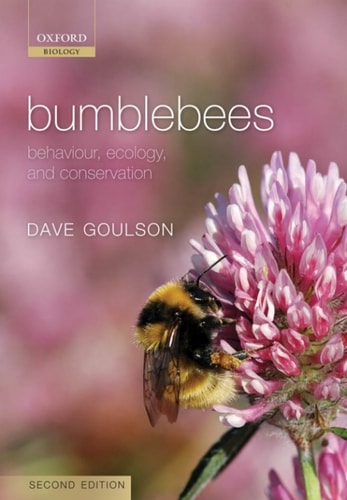
Bumblebees: Behaviour, Ecology, and Conservation
0
0
As an Amazon Associate and affiliate partner, Menrva Books earns from qualifying purchases. Learn more
Author Description
Bumblebees are familiar and charismatic insects, occurring throughout much of the world. They are increasingly being used as a model organism for studying a wide range of ecological and behavioural concepts, such as social organization, optimal foraging theories, host-parasite interactions, and pollination. Recently they have become a focus for conservationists due to mounting evidence of range contraction and catastrophic extinctions with some species disappearing from entire continents (e.g. in North America). Only by improving our understanding of their ecology can we devise sensible plans to conserve them. The role of bumblebees as invasive species (e.g. Bombus terrestris in Japan) has also become topical with the growing trade in commercial bumblebee nests for tomato pollination leading to establishment of non-native bumblebees in a number of countries. Since the publication of the first edition of the book, there have been hundreds of research papers published on bumblebees. There is clearly a continuing need for an affordable, well-illustrated, and appealing text that makes accessible all of the major advances in understanding of the behaviour and ecology of bumblebees that have been made in the last 30 years.
Menrva's Summary
THE THESIS
This text investigates the complex ecological and behavioral dynamics of bumblebees to establish a scientific foundation for their conservation. Author Dave Goulson, a professor of biology, synthesizes three decades of research to address the decline of bumblebee populations globally. The book provides a comprehensive framework for understanding how social organization, foraging patterns, and host-parasite interactions influence the survival of these insects in changing environments.
THE SCOPE MAP
What You Will Find
- Analysis of social organization and optimal foraging theories
- Examination of host-parasite interactions and pollination ecology
- Discussion on the impact of invasive bumblebee species and commercial trade
- Synthesis of hundreds of recent research papers on bee behavior
Scope Limits
- Does not provide a field identification guide for all global species
- Does not focus on solitary bee species outside the genus Bombus
THE AUTHORITY PERSPECTIVE
Experts recognize this work as a foundational text for students and conservationists seeking to understand the intersection of insect behavior and environmental policy. Readers frequently note the accessibility of the prose despite the technical density of the biological data presented.
Page Count:
336
Publication Date:
2009-01-01
Publisher:
Oxford University Press
ISBN-10:
0191574244
ISBN-13:
9780191574245
Science
Nature
Conservation
Entomology
Biology
Zoology
Bumblebees
Ecology
Community Tags
Similar Books