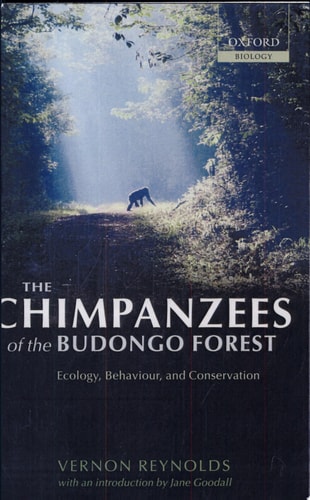
The Chimpanzees of the Budongo Forest: Ecology, Behaviour, and Conservation
0
0
As an Amazon Associate and affiliate partner, Menrva Books earns from qualifying purchases. Learn more
Author Description
Unlike humans, who came down from the trees and developed bipedal locomotion, chimpanzees have remained in the original habitat of our ancestors: the tropical rainforests of Africa. In this book, Vernon Reynolds describes in detail the work of a large number of students and senior researchers on the wild chimpanzees of the Budongo Forest Reserve in Western Uganda. He presents a coherent and in-depth account of one chimpanzee community of more than 60 individuals living in the Sonso area in the middle of the Budongo Forest, which he and his colleagues have studied intensively over the last 15 years. The chimpanzees have never been provisioned and live in an entirely natural state. Reynolds describes their forest habitat, their diet and culture, their social organization and behaviour, their diseases, and the threats to them that derive from the actions of people in the surrounding villages, the most serious of these being the presence of snares set by hunters to catch small antelopes and pigs. As founder and head of the Budongo Forest Project, Professor Reynolds has been responsible for compiling the numerous publications, reports, and dissertations written about these chimpanzees. In this book, he combines these new and often unpublished studies with past publications about Budongo Forest. Where appropriate, he also compares the Budongo chimpanzees with wild chimpanzees studied at other sites across Africa. The result is the most comprehensive account of the Budongo chimpanzees ever published, with a wealth of referenced material that will serve as a source of information for many years to come.
Menrva's Summary
THE THESIS
This book investigates the ecological dynamics, social structures, and conservation challenges of a specific community of wild chimpanzees residing in the Budongo Forest Reserve. Professor Vernon Reynolds, a seasoned primatologist and founder of the Budongo Forest Project, synthesizes fifteen years of intensive field research conducted by himself and his colleagues. The work provides a comprehensive framework for understanding how these unprovisioned primates interact with their natural environment and the anthropogenic pressures threatening their survival.
THE SCOPE MAP
What You Will Find
- Detailed analysis of chimpanzee diet, social organization, and cultural behaviors.
- Longitudinal data on the Sonso community of over 60 individuals.
- Comparative studies between Budongo chimpanzees and other African populations.
- Assessment of human-wildlife conflict, specifically the impact of snares set for other game.
Scope Limits
- The study is geographically restricted to the Budongo Forest Reserve in Western Uganda.
- The text focuses primarily on the Sonso community rather than all chimpanzee populations globally.
THE AUTHORITY PERSPECTIVE
Experts recognize this work as a foundational, comprehensive resource for primatologists and conservationists interested in long-term field studies. Readers frequently note the academic density of the prose, which effectively bridges the gap between raw field data and synthesized ecological theory.
Page Count:
312
Publication Date:
2005-01-01
Publisher:
Oxford University Press
ISBN-10:
019152333X
ISBN-13:
9780191523335
Science
Nature
Chimpanzees
Ecology
Zoology
Primatology
Conservation
Biology
Community Tags
Similar Books