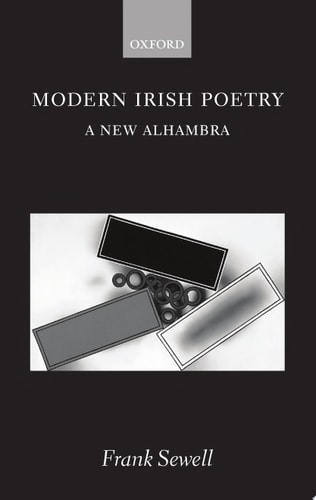
Modern Irish Poetry: A New Alhambra
0
0
As an Amazon Associate and affiliate partner, Menrva Books earns from qualifying purchases. Learn more
Author Description
Recently, Chapters On Individual Irish-language Authors Have Formed Part Of Publications Regarding Modern Irish Art And Culture In General. Such Chapters Are Welcome But They Have Excited The Curiosity Of Readers To The Degree That Longer, More Detailed Works Are Now Required To Put Writing In Irish Into Perspective. In This Study Of Four Modern Poets (two Each From Two Generations), Sewell Attempts To Illustrate Not Only The Accumulative But The Transformative Nature Of Tradition. Chapters 1 And 2 Turn From The Mid-20th Century Master Seán Ó Riordáin To The Contemporary Poet Cathal Ó Searcaigh Because The Comparison And Contrast Highlights Significant Aspects Of The Amazing Development Of Irish Poetry And, Indeed, Society In The Period. Here, Importantly, The Word 'development' Is Meant In A Neutral Way - The Image Used Is That Of A Zig-zag Movement In The Pattern Of The Continuing Irish Tradition. Chapter 3 Returns To The Slightly Earlier, Major Irish-language Poet Máirtín Ó Direáin. In Doing So, It Returns Home (from The Internationalism Of The Previous Chapter On Searcaigh) To Ireland - A Major Focus And Concern For The More Solely Traditionalist Ó Direáin. This Switch Back (in Time, Geography, Social Mores Or Outlook) Fits And Illustrates Sewell's Concept Of The Zig-zag Movement Of A Country's Culture As It Proceeds From Generation To Generation. The Positioning, Therefore, Has A Thematic Purpose. The Fourth And Final Chapter Focuses On The Contemporary Poet Nuala Ní Dhomhnaill Who Has Managed To Synthesise Tradition And Modernity (central Concerns Of This Book) And Who, In Doing So, Has Become The Current Trail-blazer Of Irish Poetry In Either Language.
Menrva's Summary
THE THESIS
How does the evolution of Irish-language poetry reflect the broader, non-linear development of Irish cultural tradition across generations? Frank Sewell, an academic specializing in Irish literature, examines the works of four prominent poets to argue that Irish literary tradition does not follow a straight line of progress. Instead, he proposes a 'zig-zag' model of cultural development, where poets oscillate between traditionalist roots and internationalist influences to synthesize the past with contemporary realities.
THE SCOPE MAP
What You Will Find
- Comparative analysis of four major Irish-language poets: Seán Ó Riordáin, Cathal Ó Searcaigh, Máirtín Ó Direáin, and Nuala Ní Dhomhnaill.
- A theoretical framework describing cultural evolution as a 'zig-zag' movement rather than linear progression.
- Examination of the tension between traditionalism and modern internationalism in Irish writing.
Scope Limits
- The study is limited to four specific poets and does not provide a comprehensive survey of all modern Irish-language poetry.
- The text focuses primarily on literary analysis rather than a broad historical account of Irish political or social history.
THE AUTHORITY PERSPECTIVE
Scholars and students of Irish literature frequently identify this work as a useful bridge for understanding the transition from mid-20th-century traditionalism to contemporary synthesis. Readers often note the academic density of the prose, which is intended for those already familiar with the primary texts and the broader context of Irish cultural studies.
Page Count:
250
Publication Date:
2001-01-01
Publisher:
Oup Oxford
ISBN-10:
0191584355
ISBN-13:
9780191584350
Poetry
Academic
Irish literature
Literary Criticism
Criticism history
Community Tags
Similar Books