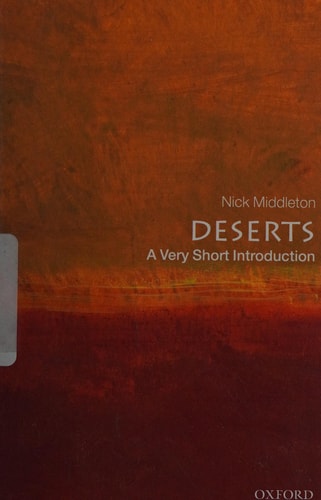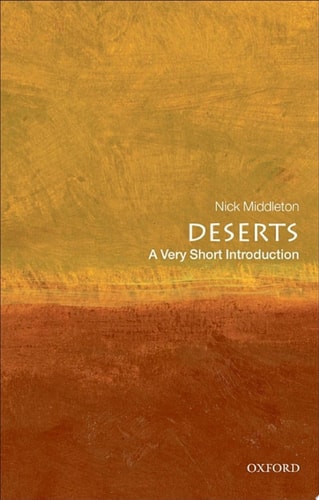
Deserts: A Very Short Introduction
0
0
As an Amazon Associate and affiliate partner, Menrva Books earns from qualifying purchases. Learn more
Author Description
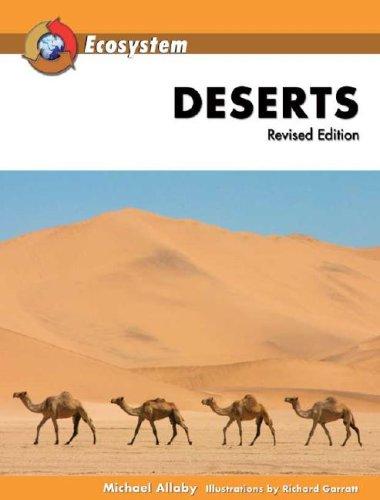
Deserts make up a third of the planet's land surface, but if you picture a desert, what comes to mind? A wasteland? A drought? A place devoid of all life forms? Deserts are remarkable places. Typified by drought and extremes of temperature, they can be harsh and hostile; but many deserts are also spectacularly beautiful, and on occasion teem with life. Nick Middleton explores how each desert is unique: through fantastic life forms, extraordinary scenery, and ingenious human adaptations. He demonstrates a desert's immense natural beauty, its rich biodiversity, and uncovers a long history of successful human occupation. This Very Short Introduction tells you everything you ever wanted to know about these extraordinary places and captures their importance in the working of our planet. ABOUT THE SERIES: The Very Short Introductions series from Oxford University Press contains hundreds of titles in almost every subject area. These pocket-sized books are the perfect way to get ahead in a new subject quickly. Our expert authors combine facts, analysis, perspective, new ideas, and enthusiasm to make interesting and challenging topics highly readable.
Menrva's Summary
THE THESIS
This book investigates the ecological, geographical, and human dimensions of desert environments to challenge common misconceptions about these regions. Nick Middleton, a physical geographer and fellow at Oxford University, utilizes scientific data and historical observation to argue that deserts are complex, biodiverse, and historically significant ecosystems rather than mere wastelands. He presents a framework that balances the harsh physical realities of arid climates with the ingenuity of life forms and human cultures that have adapted to these extremes.
THE SCOPE MAP
What You Will Find
- Analysis of global desert distribution and climatic classification.
- Examination of unique flora and fauna adaptations to extreme drought.
- Historical overview of human occupation and resource management in arid zones.
- Discussion of desertification and environmental change.
Scope Limits
- The text does not provide an exhaustive regional gazetteer of every desert on Earth.
- It does not offer detailed technical manuals for survival or geological surveying.
THE AUTHORITY PERSPECTIVE
Experts and general readers alike identify this work as a concise, accessible entry point for understanding arid geography. Reviewers frequently note the clarity of the prose and the author's ability to synthesize complex environmental science into a brief, readable format.
Page Count:
153
Publication Date:
2009-01-01
Publisher:
OUP Oxford
ISBN-10:
0191609838
ISBN-13:
9780191609831
History
Nature
Science
Non-Fiction
Environment
Geography