Juridical Encounters
0
0
As an Amazon Associate and affiliate partner, Menrva Books earns from qualifying purchases. Learn more
Author Description
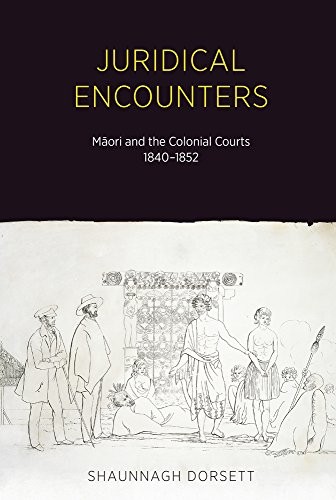
From 1840 to 1852, the Crown Colony period, the British attempted to impose their own law on New Zealand. In theory M ̐ưaori, as subjects of the Queen, were to be ruled by British law. But in fact, outside the small, isolated, British settlements, most M ̐ưaori and many settlers lived according to tikanga. How then were M ̐ưaori to be brought under British law? Influenced by the idea of exceptional laws that was circulating in the Empire, the colonial authorities set out to craft new regimes and new courts through which M ̐ưaori would be encouraged to forsake tikanga and to take up the laws of the settlers. Shaunnagh Dorsett examines the shape that exceptional laws took in New Zealand, the ways they influenced institutional design and the engagement of M ̐ưaori with those new institutions, particularly through the lowest courts in the land. It is in the everyday micro-encounters of M ̐ưaori and the new British institutions that the beginnings of the displacement of tikanga and the imposition of British law can be seen
Menrva's Summary
THE THESIS
This book investigates the complex legal and cultural encounters between British colonial law and Māori customary law (tikanga) in New Zealand during the Crown Colony period (1840-1852). The central problem addressed is how British colonial authorities attempted to impose their legal system on Māori, who largely continued to live by tikanga outside of small British settlements. Shaunnagh Dorsett examines the development of exceptional legal regimes and new courts designed to encourage Māori to abandon tikanga and adopt settler laws. The analysis focuses on the engagement of Māori with these new institutions, particularly at the lowest court levels, revealing how everyday interactions laid the groundwork for the displacement of tikanga and the imposition of British law.
THE SCOPE MAP
- The Crown Colony period in New Zealand (1840-1852)
- The imposition of British law on Māori subjects
- The persistence of tikanga among Māori and settlers
- The concept and application of exceptional laws in the Empire
- The design of new legal regimes and courts for Māori
- Māori engagement with colonial institutions
- Analysis of interactions within the lowest courts
THE AUTHORITY PERSPECTIVE
The book examines the historical imposition of British law on Māori in New Zealand, focusing on the period between 1840 and 1852. It analyzes the creation of specific legal frameworks and courts intended to supplant Māori customary law (tikanga). The work highlights the significance of everyday legal encounters in this process. The analysis suggests that these micro-encounters were crucial in the gradual displacement of tikanga and the establishment of British legal dominance.
Page Count:
344
Publication Date:
2018-01-01
ISBN-10:
1869408640
ISBN-13:
9781869408640
Non-Fiction
History
Law
Community Tags
Other Editions(2)

Similar Books