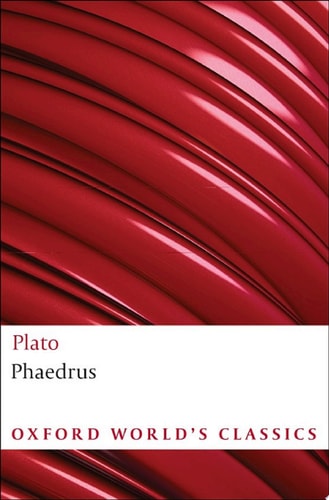
Phaedrus
0
0
As an Amazon Associate and affiliate partner, Menrva Books earns from qualifying purchases. Learn more
Author Description
Some of our greatest blessings come from madness Phaedrus is widely recognized as one of Plato's most profound and beautiful works. It takes the form of a dialogue between Socrates and Phaedrus and its ostensible subject is love, especially homoerotic love. Socrates reveals it to be a kind of divine madness that can allow our souls to grow wings and soar to their greatest heights. Then the conversation changes direction and turns to a discussion of rhetoric, which must be based on truth passionately sought, thus allying it to philosophy. The dialogue closes by denigrating the value of the written word in any context, compared to the living teaching of a Socratic philosopher. The shifts of topic and register have given rise to doubts about the unity of the dialogue, doubts which are addressed in the introduction to this volume. Full explanatory notes also elucidate issues throughout the dialogue that might puzzle a modern reader. ABOUT THE SERIES: For over 100 years Oxford World's Classics has made available the widest range of literature from around the globe. Each affordable volume reflects Oxford's commitment to scholarship, providing the most accurate text plus a wealth of other valuable features, including expert introductions by leading authorities, helpful notes to clarify the text, up-to-date bibliographies for further study, and much more.
Menrva's Summary
THE THESIS
This work investigates the nature of love, the mechanics of rhetoric, and the epistemological limitations of written communication. Plato, the foundational figure of Western philosophy, utilizes the Socratic method to explore how divine madness facilitates the soul's ascent toward truth. By contrasting the art of persuasion with the pursuit of philosophical wisdom, the text argues that true rhetoric must be grounded in an understanding of the soul and the objective reality of the forms.
THE SCOPE MAP
What You Will Find
- A structured dialogue between Socrates and Phaedrus regarding the nature of Eros.
- An analysis of the tripartite soul and its capacity for intellectual growth.
- A critique of written text as a static medium compared to dialectical exchange.
Scope Limits
- The text does not provide a comprehensive manual for public speaking, focusing instead on the philosophical underpinnings of communication.
- It does not offer a systematic theology, but rather a metaphorical exploration of the soul's divine origins.
THE AUTHORITY PERSPECTIVE
Scholars frequently identify this dialogue as a pivotal text for understanding Plato's mature views on aesthetics and the soul. Readers often note the density of the prose and the necessity of the provided explanatory notes to navigate the shifts in thematic focus.
Page Count:
169
Publication Date:
2002-01-01
Publisher:
OUP Oxford
ISBN-10:
0191604518
ISBN-13:
9780191604515
Philosophy
Rhetoric
Plato
History & Surveys
Ethics
Dialogues
Classical Philosophy
Socrates
Community Tags
Other Editions(53)

Wildside Press
2024
Default edition
Independently published
2024
Brian Westland
2023
Blurb, Incorporated
2023
Independently published
2023

Blurb, Incorporated
2021

Phoemixx Classics Ebooks
2021

Independently Published
2021
Independently Published
2020
Independently published
2020

Digireads.com Publishing
2019

Blurb, Incorporated
2019

Digireads.com Publishing
2019

Independently Published
2018

CreateSpace Independent Publishing Platform
2018
CreateSpace Independent Publishing Platform
2018

CreateSpace Independent Publishing Platform
2018
CreateSpace Independent Publishing Platform
2017

CreateSpace Independent Publishing Platform
2017

CreateSpace Independent Publishing Platform
2016

CreateSpace Independent Publishing Platform
2016

CreateSpace Independent Publishing Platform
2016

CreateSpace Independent Publishing Platform
2016

CreateSpace Independent Publishing Platform
2015

CreateSpace Independent Publishing Platform
2015
CreateSpace Independent Publishing Platform
2014
CreateSpace Independent Publishing Platform
2013

CreateSpace Independent Publishing Platform
2013

CreateSpace Independent Publishing Platform
2013

Simon & Brown
2012
CreateSpace Independent Publishing Platform
2012

Benediction Classics
2011
Arc Manor
2011

Kessinger Publishing, LLC
2010
Kessinger Publishing, LLC
2010

Akasha Classics
2009

1st World Publishing, Incorporated
2008
Arc Manor
2008
1st World Library Literary Society
2008

Echo Library
2006

Digireads.com
2006

EBooksLib
2005
Kessinger Publishing
2004

Oxford University Press
2003

Hackett Publishing
2003
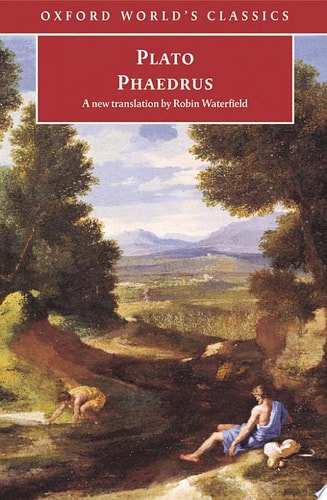
Oxford University Press, UK
2002
INDY PUB
2002
IndyPublish.com
2002

Oxford University Press, Uk
2002
OUP Oxford
2002
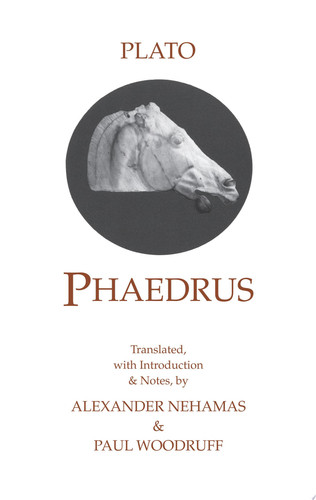
Hackett Publishing
1995

Project Gutenberg
1900

Brian Westland
1874
Similar Books
Reader Comments
Share Your Thoughts
No comments yet. Be the first to share your thoughts!