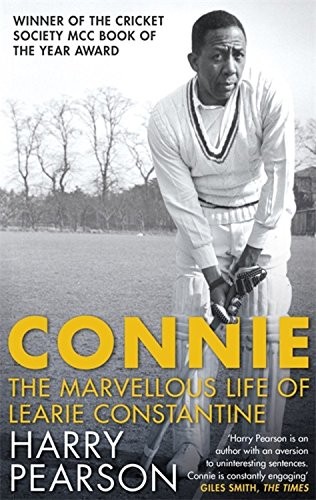
Connie
0
0
As an Amazon Associate and affiliate partner, Menrva Books earns from qualifying purchases. Learn more
Author Description
"Born in rural Trinidad in 1901, Learie Constantine was the most dynamic all-round cricketer of his age (1928-1939) when he played Test cricket for the West Indies and club cricket for Nelson. Few who saw Constantine in action would ever forget the experience. As well as the cricketing genius that led to Constantine being described as 'the most original cricketer of his time', Connie illuminates the world that he grew up in, a place where the memories of slavery were still fresh and where a peculiar, almost obsessive, devotion to 'Englishness' created a society that was often more British than Britain itself. Harry Pearson looks too at the society Constantine came to in England, which he would embrace as much as it embraced him: the narrow working-class world of the industrial North during a time of grave economic depression. Connie reveals how a flamboyant showman from the West Indies actually dovetailed rather well in a place where local music-hall stars such as George Formby, Frank Randle and Gracie Fields were treated as heroes, and how Lancashire League cricket fitted into this world of popular entertainment."--Publisher's description.
Menrva's Summary
THE THESIS
Learie Constantine's life and career are examined through the lens of his dual identity and the societies he navigated. Born in Trinidad in 1901, Learie Constantine became a dynamic all-round cricketer between 1928 and 1939, playing Test cricket for the West Indies and club cricket for Nelson. The book explores the society of his birth, where memories of slavery were fresh and a devotion to 'Englishness' shaped a unique culture. It also details his arrival in England, where he embraced the working-class industrial North during an economic depression, finding a place within a popular entertainment landscape alongside music-hall stars.
THE SCOPE MAP
- The life and cricketing career of Learie Constantine, a prominent all-round cricketer of the 1928-1939 era.
- An exploration of rural Trinidadian society in the early 20th century, including the lingering impact of slavery and the concept of 'Englishness'.
- An examination of industrial Northern England during a period of economic depression.
- Analysis of how Constantine's flamboyant personality and cricket career integrated into the popular entertainment culture of Lancashire.
- Insights into the social and cultural dynamics between the West Indies and Britain during the interwar period.
THE AUTHORITY PERSPECTIVE
The book offers a comprehensive look at Learie Constantine's life, highlighting his significance as a cricketer and his navigation of complex social identities. It delves into the cultural landscapes of both Trinidad and industrial England, providing context for his experiences. The narrative connects his personal journey with broader historical and societal trends of the early to mid-20th century. This approach allows for an understanding of how a prominent West Indian figure found his place within British society.
Page Count:
368
Publication Date:
2018-01-01
ISBN-10:
0349140391
ISBN-13:
9780349140391
History
Sports
Biography
Non-Fiction
Community Tags
Similar Books














