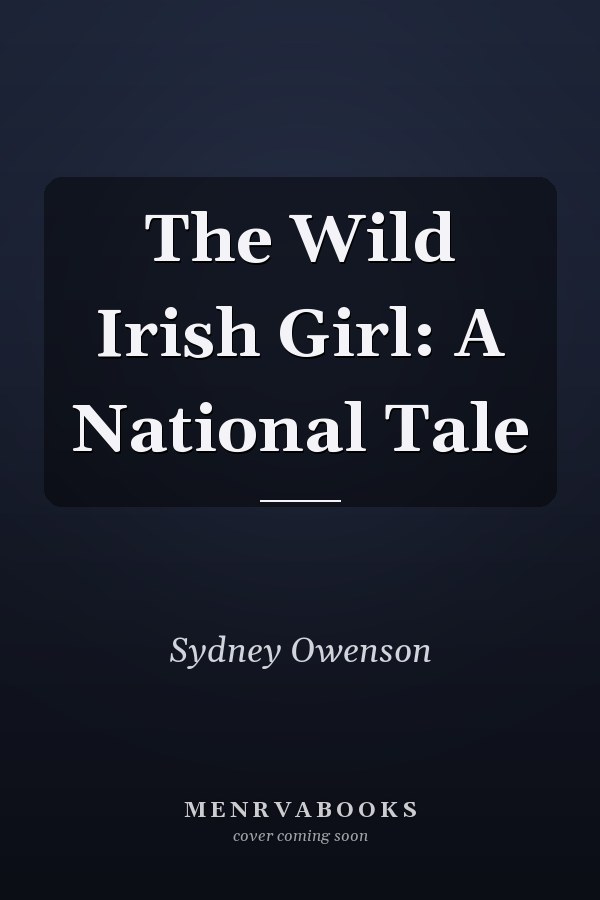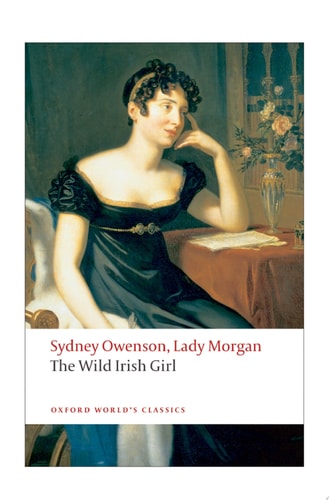
The Wild Irish Girl: A National Tale
0
0
As an Amazon Associate and affiliate partner, Menrva Books earns from qualifying purchases. Learn more
Author Description
'I long to study the purely national, natural character of an Irishwoman' When Horatio, the son of an English lord, is banished to his father's Irish estate as punishment for gambling debts and dissipated living, he adopts the persona of knight errant and goes off in search of adventure. On the wild west coast of Connaught he finds remnants of a romantic Gaelic past a dilapidated castle, a Catholic priest, a deposed king and the king's lovely and learned daughter, Glorvina. In this setting and among these characters Horatio learns the history, culture and language of a country he had once scorned, but he must do so in disguise for his own English ancestors are responsible for the ruin of the Gaelic family he comes to love. Written after the Act of Union, The Wild Irish Girl (1806) is a passionately nationalistic novel and a founding text in the discourse of Irish nationalism. The novel proved so controversial in Ireland that Sydney Owenson, later Lady Morgan, was put under surveillance by Dublin Castle. ABOUT THE SERIES: For over 100 years Oxford World's Classics has made available the widest range of literature from around the globe. Each affordable volume reflects Oxford's commitment to scholarship, providing the most accurate text plus a wealth of other valuable features, including expert introductions by leading authorities, helpful notes to clarify the text, up-to-date bibliographies for further study, and much more.
Menrva's Summary
THE PULSE
A young English nobleman, exiled to his family's Irish estate, encounters a displaced Gaelic family and finds his prejudices challenged by the daughter of a deposed king. Horatio, seeking to escape his reputation for dissipation, adopts a disguise to explore the rugged landscape of Connaught. He encounters Glorvina, a learned and noble Irishwoman, whose family history is inextricably linked to the destruction wrought by his own ancestors. The narrative unfolds through an epistolary framework, utilizing letters to document Horatio's internal transformation and his growing appreciation for Irish culture, language, and history. He must navigate the tension between his English identity and his burgeoning loyalty to the Gaelic traditions he once dismissed.
INSIDE THE PAGES
- Epistolary narrative structure utilizing letters
- Romanticized depiction of the Irish landscape
- Exploration of cultural identity and national heritage
- Contrast between English colonial influence and Gaelic tradition
- Use of disguise as a plot device for social observation
- Integration of Irish folklore and linguistic elements
- Themes of reconciliation and political tension post-Act of Union
- Character-driven development of the protagonist's moral perspective
THE COLLECTIVE ECHO
Readers and critics frequently identify this work as a foundational text in the development of Irish national literature. Discussion often centers on the author's deliberate attempt to bridge the divide between English and Irish perspectives through the lens of a romantic encounter. Many observers note that the pacing is heavily influenced by the conventions of the early nineteenth-century novel, prioritizing philosophical and cultural dialogue over rapid action. The text is often analyzed for its controversial reception at the time of publication, particularly regarding its sympathetic portrayal of Gaelic history. Scholars highlight the work's effectiveness in establishing a distinct Irish identity within the broader context of British literature.
Page Count:
266
Publication Date:
2008-01-01
Publisher:
OUP Oxford
ISBN-10:
0192669583
ISBN-13:
9780192669582
Romance
classic
Gothic
Nationalist Fiction
Historical
Irish literature
English
English & College Success