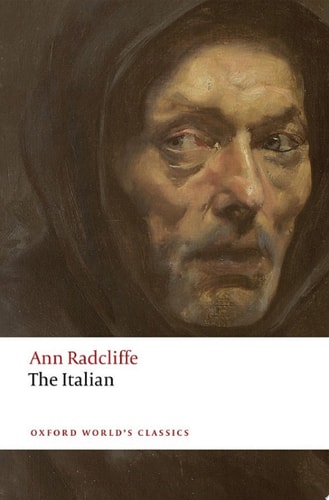
The Italian
0
0
As an Amazon Associate and affiliate partner, Menrva Books earns from qualifying purchases. Learn more
Author Description
Among his associates no one loved him, many disliked him, and more feared him.' Father Schedoni is enlisted by the imperious Marchesa di Vivaldi to prevent her son from marrying the beautiful Ellena. Schedoni has no scruples in kidnapping Ellena and in undertaking whatever villainy will further his own ends. His menacing presence dominates a gripping tale of love and betrayal, abduction and assassination, and incarceration in the dreadful dungeons of the Inquisition. Uncertainty and doubt lie everywhere, in Radcliffe's last and most unnerving novel. Ann Radcliffe defined the 'terror' genre of writing and helped to establish the Gothic novel, thrilling readers with her mysterious plots and eerie effects. In The Italian she rejects the rational certainties of the Enlightenment for a more ambiguous and unsettling account of what it is to be an individual - particularly a woman - in a culture haunted by history and dominated by institutional power. This new edition includes Radcliffe's important essay 'On the Supernatural in Poetry', in which she distinguishes terror writing from horror.
Menrva's Summary
THE PULSE
Father Schedoni, a man of profound malice, is hired by the Marchesa di Vivaldi to prevent her son from marrying the virtuous Ellena, setting into motion a series of abductions and dark conspiracies. The narrative follows the young lovers, Vivaldi and Ellena, as they attempt to navigate a landscape defined by the oppressive reach of the Inquisition and the machinations of the aristocracy. Radcliffe employs a third-person perspective to track the movements of the protagonists against the calculated villainy of Schedoni. The world is constrained by rigid social hierarchies and the looming threat of religious persecution, forcing the characters to rely on their wits to survive the physical and psychological dangers of the Italian setting.
INSIDE THE PAGES
- Atmospheric descriptions of ruined abbeys and dark dungeons
- Exploration of the conflict between individual agency and institutional power
- Use of suspense to delay the revelation of hidden identities
- Focus on the psychological impact of terror versus horror
- Integration of the Inquisition as a primary antagonist force
- Emphasis on the vulnerability of women in patriarchal structures
- Inclusion of Radcliffe's essay on the nature of the supernatural
- Stylistic reliance on eerie settings and moral ambiguity
THE COLLECTIVE ECHO
Readers and critics frequently identify this work as a foundational text in the development of the Gothic genre. Discussion often centers on Radcliffe's ability to maintain tension through the use of psychological dread rather than overt violence. Scholars highlight the contrast between the rational Enlightenment values of the era and the irrational, haunting atmosphere she constructs within the narrative. Many readers note that the character of Schedoni remains one of the most effective villains in literature due to his complex motivations and menacing presence. The text is widely regarded as a significant study of how institutional power can stifle individual freedom and personal desire.
Page Count:
488
Publication Date:
2017-01-01
Publisher:
OUP Oxford
ISBN-10:
0191009555
ISBN-13:
9780191009556
Mystery
Romance
Horror
classic
Italy
Historical
Gothic
English
English & College Success
Community Tags
Other Editions(43)
Naxos and Blackstone Publishing
2023
Default edition
West Margin Press
2022

Mint Editions
2022

Independently Published
2020
CreateSpace Independent Publishing Platform
2018
CreateSpace Independent Publishing Platform
2018

CreateSpace Independent Publishing Platform
2018

CreateSpace Independent Publishing Platform
2018

Black Curtain Press
2018

CreateSpace Independent Publishing Platform
2018

CreateSpace Independent Publishing Platform
2018

CreateSpace Independent Publishing Platform
2017

CreateSpace Independent Publishing Platform
2017
CreateSpace Independent Publishing Platform
2017
CreateSpace Independent Publishing Platform
2017
CreateSpace Independent Publishing Platform
2017

CreateSpace Independent Publishing Platform
2017

CreateSpace Independent Publishing Platform
2017

CreateSpace Independent Publishing Platform
2017
CreateSpace Independent Publishing Platform
2017

CreateSpace Independent Publishing Platform
2017

Oxford University Press
2017
CreateSpace Independent Publishing Platform
2017

CreateSpace Independent Publishing Platform
2017
OUP Oxford
2017
CreateSpace Independent Publishing Platform
2016

CreateSpace Independent Publishing Platform
2016

CreateSpace Independent Publishing Platform
2016

CreateSpace Independent Publishing Platform
2016

CreateSpace Independent Publishing Platform
2014

Wordsworth Editions Limited
2011

ReadHowYouWant.com, Limited
2010
ReadHowYouWant.com, Limited
2009

Digireads.com Publishing
2009
Digireads.com
2009

ReadHowYouWant
2008
Oxford University Press
2008

Oneworld Classics
2008
Ivan R. Dee Publisher
2002

Penguin
2001

Penguin UK
2000

ReadHowYouWant.com
2000

Oxford University Press
1982
Similar Books


Reader Comments
Share Your Thoughts
No comments yet. Be the first to share your thoughts!