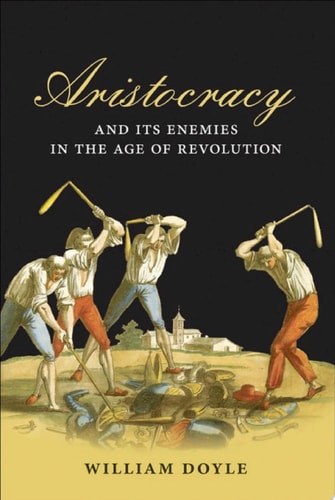
Aristocracy and its Enemies in the Age of Revolution
0
0
As an Amazon Associate and affiliate partner, Menrva Books earns from qualifying purchases. Learn more
Author Description
Since time immemorial Europe had been dominated by nobles and nobilities. In the eighteenth century their power seemed better entrenched than ever. But in 1790 the French revolutionaries made a determined attempt to abolish nobility entirely. 'Aristocracy' became the term for everything they were against, and the nobility of France, so recently the most dazzling and sophisticated elite in the European world, found itself persecuted in ways that horrified counterparts in other countries. Aristocracy and its Enemies traces the roots of the attack on nobility at this time, looking at intellectual developments over the preceding centuries, in particular the impact of the American Revolution. It traces the steps by which French nobles were disempowered and persecuted, a period during which large numbers fled the country and many perished or were imprisoned. In the end abolition of the aristocracy proved impossible, and nobles recovered much of their property. Napoleon set out to reconcile the remnants of the old nobility to the consequences of revolution, and created a titled elite of his own. After his fall the restored Bourbons offered renewed recognition to all forms of nobility. But nineteenth century French nobles were a group transformed and traumatized by the revolutionary experience, and they never recovered their old hegemony and privileges. As William Doyle shows, if the revolutionaries failed in their attempt to abolish nobility, they nevertheless began the longer term process of aristocratic decline that has marked the last two centuries.
Menrva's Summary
THE THESIS
This work investigates the origins and consequences of the French Revolution's attempt to dismantle the institution of nobility and the subsequent long-term decline of aristocratic power in Europe. William Doyle, a prominent historian specializing in the French Revolution, utilizes extensive archival research and historical analysis to examine how the revolutionary fervor of 1790 transformed the social and political status of the French elite. The book argues that while the complete abolition of nobility proved elusive, the revolutionary experience permanently altered the nature of aristocratic privilege and hegemony.
THE SCOPE MAP
What You Will Find
- Analysis of intellectual shifts regarding social hierarchy from the 18th century onward.
- Examination of the impact of the American Revolution on French political thought.
- Detailed account of the persecution, emigration, and imprisonment of French nobles during the revolutionary period.
- Assessment of Napoleon's efforts to integrate old nobility with a new titled elite.
Scope Limits
- The study focuses primarily on the French experience, with limited comparative analysis of other European nobilities beyond their reactions to French events.
- The narrative concludes its primary analysis in the post-Napoleonic era, leaving the broader 20th-century developments of aristocracy largely outside the scope.
THE AUTHORITY PERSPECTIVE
Historians and scholars of the French Revolution frequently cite this text for its clear articulation of the social transformations that occurred during the late 18th century. Readers often note the academic rigor of the prose, which provides a comprehensive look at the intersection of political ideology and class structure.
Page Count:
382
Publication Date:
2009-01-01
Publisher:
OUP Oxford
ISBN-10:
0191609714
ISBN-13:
9780191609718
History
Social History
European History
Public opinion
French Revolution
Nobility france
Nobility
Community Tags
Other Editions(2)

Similar Books